missing translation for 'onlineSavingsMsg'
Learn More
Learn More


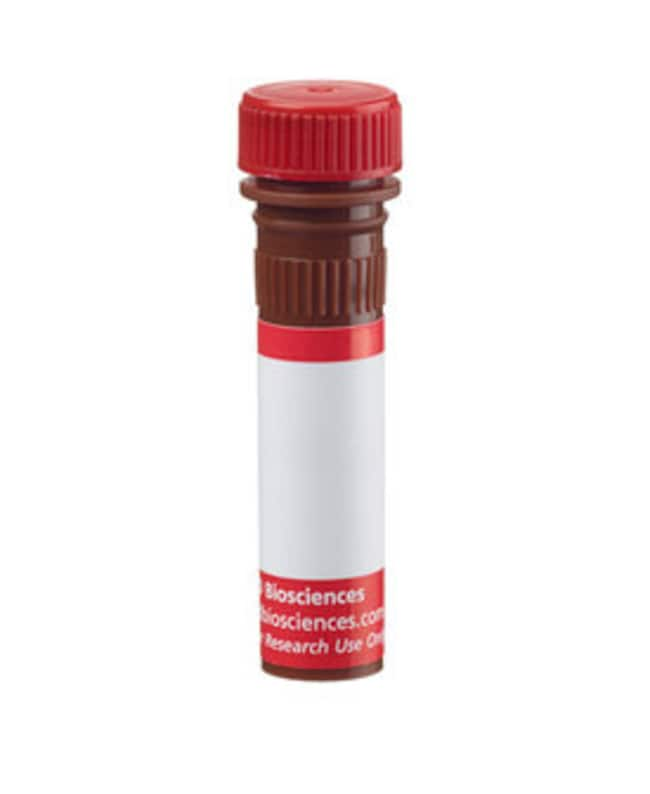
NK-1.1 Mouse anti-Mouse, APC, Clone: PK136, BD
Mouse Monoclonal Antibody
109.95€ - 311.00€
Especificaciones
| Antígeno | NK-1.1 |
|---|---|
| Clon | PK136 |
| Concentración | 0.2mg/mL |
| Aplicaciones | Flow Cytometry |
| Clasificación | Monoclonal |
| Código de producto | Marca | Cantidad | Precio | Cantidad y disponibilidad | |||||
|---|---|---|---|---|---|---|---|---|---|
| Código de producto | Marca | Cantidad | Precio | Cantidad y disponibilidad | |||||
|
15840789
|
BD Biosciences
561117 |
25 μg |
 110.00€ 109.95€ / cada uno Ahorro 0.05€ 0.05% Descuento |
Por favor, inicie sesión para comprar este producto. ¿No tiene usuario web? Regístrese hoy mismo. | |||||
|
15876348
|
BD Biosciences
550627 |
0.1 mg |
311.00€
cada uno |
Por favor, inicie sesión para comprar este producto. ¿No tiene usuario web? Regístrese hoy mismo. | |||||
Description
In the mouse, at least three members of the Klrb (Killer cell lectin-like ; formerly NKR-P1) gene family have been identified (Klrb1a/NKR-P1A, Klrb1b/NKR-P1B, and Klrb1c/NKR-P1C); but in the human gene family, a single homologue has been designated KLRB1, NKR-P1A, or CD161. The KLRB1/NKR-P1 family of proteins are type-II-transmembrane C-type lectin receptors. KLRB1C/NKR-P1C activates NK-cell cytotoxicity, while KLRB1B/NKR-P1B functions as an inhibitory receptor. KLRB1B/NKR-P1B protein has intracellular Immunoreceptor Tyrosine-based Inhibitory Motif (ITIM), while KLRB1C/NKR-P1C lacks ITIM and activates via association with Fc Receptor γchain. Strikingly, KLRB1B/NKR-P1B and KLRB1C/NKR-P1C share 96% amino acid sequence identity in their extracellular C-type lectin domains. The PK136 antibody reacts with the NK-1.1 surface antigen (CD161c) encoded by the Klrb1c/NKR-P1C gene expressed on natural killer (NK) cells in selected strains of mice (eg, C57BL, FVB/N, NZB, but not A, AKR, BALB/c, CBA/J, C3H, C57BR, C58, DBA/1, DBA/2, NOD, SJL, 129) and the CD161b antigen encoded by the Klrb1b/NKR-P1B gene expressed only on Swiss NIH and SJL mice, but not on C57BL/6. Expression of KLRB1C/NKR-P1C protein is correlated with the ability to lyse tumor cells in vitro and to mediate rejection of bone marrow allografts. The NK-1.1 marker is useful in defining NK cells; however, the antigen is also expressed on a rare, specialized population of T lymphocytes (NK-T cells) and some cultured monocytes. Plate-bound PK136 mAb, in combination with low concentrations of IL-2, induces proliferation of a subset of NK cells.
Specifications
| NK-1.1 | |
| 0.2mg/mL | |
| Monoclonal | |
| Mouse | |
| Mouse | |
| IgG2a κ | |
| Affinity Purified | |
| Klrb1b, CD161b, Nkrp1b; Klrb1c, CD161c, NK1.1, Nkrp1c |
| PK136 | |
| Flow Cytometry | |
| APC | |
| RUO | |
| Aqueous buffered solution containing ≤0.09% sodium azide. | |
| Primary | |
| Store undiluted at 4°C and protected from prolonged exposure to light. Do not freeze. |
For Research Use Only.
Spot an opportunity for improvement?Share a Content Correction
Product Content Correction
Your input is important to us. Please complete this form to provide feedback related to the content on this product.
Product Title