missing translation for 'onlineSavingsMsg'
Learn More
Learn More
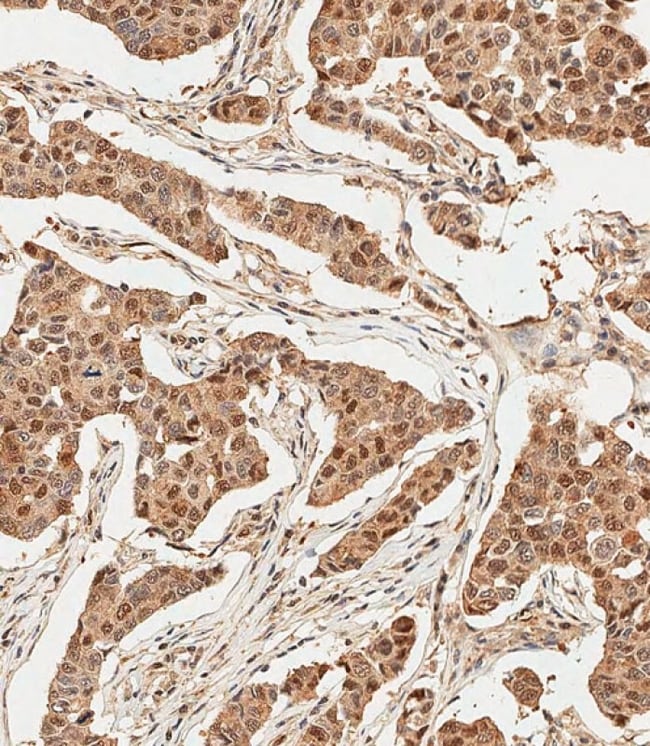
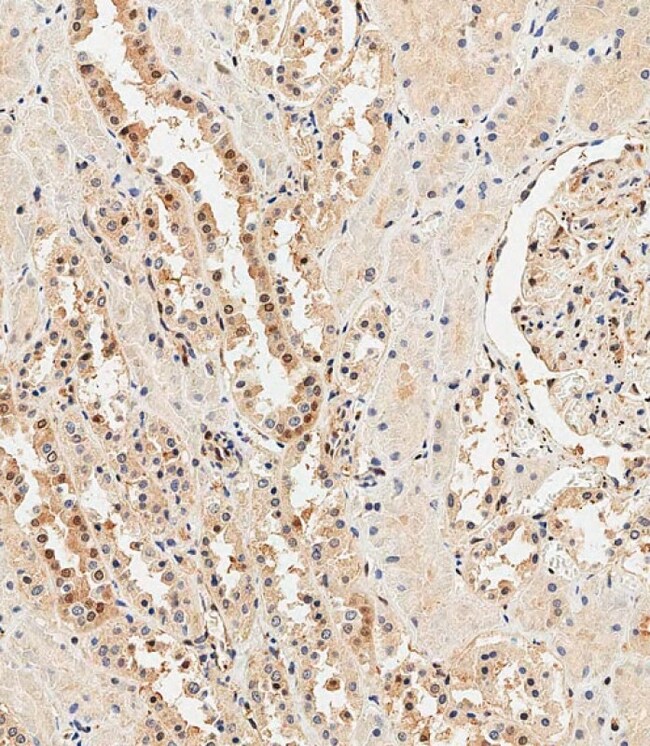
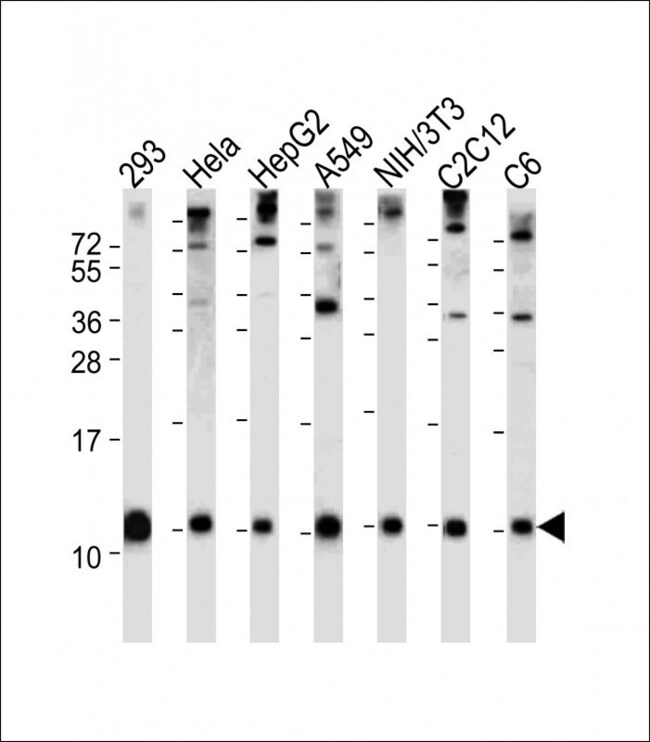
Invitrogen™ Ubiquitin Polyclonal Antibody
Descripción
This antibody is predicted to react with bovine, chicken, canine, hamster, mouse, porcine, non-human primate, rat, rabbit and Xenopus based on sequence homology.
Ubiquitin, a highly conserved protein that has a major role in targeting cellular proteins for degradation by the 26S proteosome, is synthesized as a precursor protein consisting of either polyubiquitin chains or a single ubiquitin fused to an unrelated protein. This gene encodes a fusion protein consisting of ubiquitin at the N terminus and ribosomal protein S27a at the C terminus. When expressed in yeast, the protein is post-translationally processed, generating free ubiquitin monomer and ribosomal protein S27a. Ribosomal protein S27a is a component of the 40S subunit of the ribosome and belongs to the S27AE family of ribosomal proteins. It contains C4-type zinc finger domains and is located in the cytoplasm. Pseudogenes derived from this gene are present in the genome. As with ribosomal protein S27a, ribosomal protein L40 is also synthesized as a fusion protein with ubiquitin; similarly, ribosomal protein S30 is synthesized as a fusion protein with the ubiquitin-like protein fubi. Multiple alternatively spliced transcript variants that encode the same proteins have been identified.

Especificaciones
Especificaciones
| Antígeno | Ubiquitin |
| Aplicaciones | Immunohistochemistry (Paraffin), Western Blot |
| Clasificación | Polyclonal |
| Conjugado | Unconjugated |
| Formulación | PBS with 0.09% sodium azide; pH 7.4 |
| génica | UBB |
| N.º de referencia del gen | P0CG47, P0CG48, P0CG49, P0CG50, P0CG51, P24051, P62979, P62982, P62983, P62984, P62986, P62987, Q63429, Q6ZWY3, Q71UM5 |
| Alias de gen | 0610006J14Rik; 1810034D23Rik; 2700054O04Rik; 40S ribosomal protein S27a; 40S ribosomal protein S27-like; 40S ribosomal protein S27-like protein; AI194771; AL033289; CEP80; CG5271; CG5271-PA; Chap1; Dmel\CG5271; Dmel_CG5271; Dub80; epididymis luminal protein 112; epididymis secretory protein Li 50; HEL112; HEL-S-50; hm:zeh0386; HMG20; hPLIC-2; HRIHFB2157; HUBCEP52; ik:tdsubc_1f2; l(2)04820; l(2)31Ei; LOC100912032; LOC101747587; male female sterile 31; mfs(2)31; mfs(2)48; mfs48; OTTHUMP00000200786; OTTHUMP00000201692; PLIC-2; polyubiquitin; polyubiquitin B; polyubiquitin C; poly-ubiquitin precursor; polyubiquitin-B; Polyubiquitin-C; polyubiquitin-C-like; RE44350p; ribosomal protein S27; ribosomal protein S27 like; ribosomal protein S27A; ribosomal protein S27a L homeolog; ribosomal protein S27a S homeolog; ribosomal protein S27-like; ribosomal protein S27-like protein; RPL40; RpS27; Rps27a; rps27a.L; rps27a.S; RpS27A-PA; RPS27L; S27A; similar to polyubiquitin; similar to ubiquitin-S27a fusion protein; Small ribosomal subunit protein eS27-like; Small ribosomal subunit protein eS31; tdsubc_1f2; TI-225; UB3-D; Uba52; UBA80; UBB; Ubb2; UBC; UBCEP1; UBCEP80; Ubi-f80; Ubi-m; Ubiq; Ubiquilin 2; ubiquitin; ubiquitin (34 AA) (1 is 2nd base in codon); ubiquitin and ribosomal protein S27a; ubiquitin B; ubiquitin C; ubiquitin carboxyl extension protein 80; ubiquitin copy 4; ubiquitin fusion 80; ubiquitin polyprotein (heat shock related); ubiquitin/ribosomal protein; ubiquitin-40S ribosomal protein S27a; ubiquitin-40S ribosomal protein S27a-like; ubiquitin-CEP80; ubiquitin-hybrid protein precursor; Ubiquitin-monomeric; Ubiquitin-related; Ubiquitin-related 1; Ubiquitin-related 2; ubiquitin-S27a fusion protein; Unknown (protein for MGC:127652); unnamed protein product; XELAEV_18028796mg; xx:tdsubc_1f2; zgc:66168; zgc:66168 protein |
| Símbolos de los genes | RPS27A, RPS27L, UBA52, UBB, UBC |
| Especie del huésped | Rabbit |
| Mostrar más |
Título del producto
Al hacer clic en Enviar, acepta que Fisher Scientific se ponga en contacto con usted en relación con los comentarios que ha proporcionado en este formulario. No compartiremos su información para ningún otro fin. Toda la información de contacto proporcionada se mantendrá de acuerdo con nuestra Política de Privacidad. Política de privacidad.
¿Detecta una oportunidad de mejora?