missing translation for 'onlineSavingsMsg'
Learn More

Invitrogen™ TSC2 Polyclonal Antibody
GREENER_CHOICE

Código de producto. 16334465 Tienda Thermo Scientific Productos
Change view
Click to view available options
Cantidad:
100 μg
Tamaño de la unidad:
100 microgramos
Código de producto. Cantidad unitSize
16334465 100 μg 100 microgramos
1 options
Este artículo no se puede devolver. Vea la política de devoluciones

Código de producto. 16334465

Marca: Invitrogen™ PA595194

Por favor, para comprar este producto. ¿No tiene usuario web? Regístrese hoy mismo.

Este artículo no se puede devolver. Vea la política de devoluciones

Rabbit Polyclonal Antibody

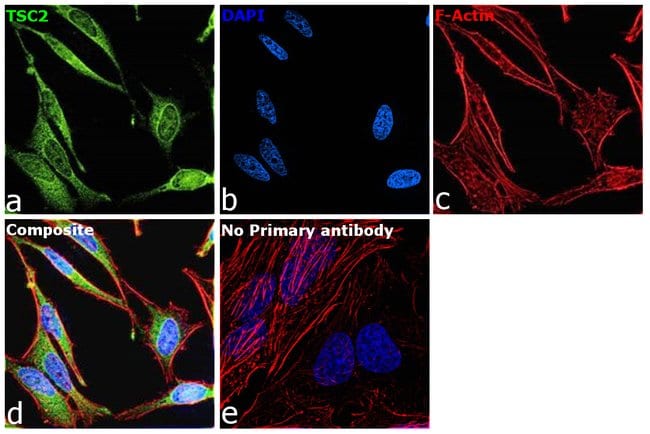
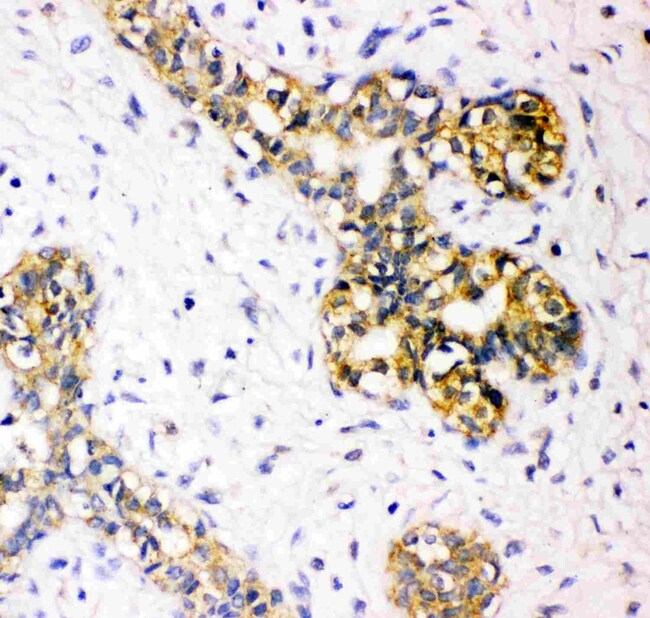
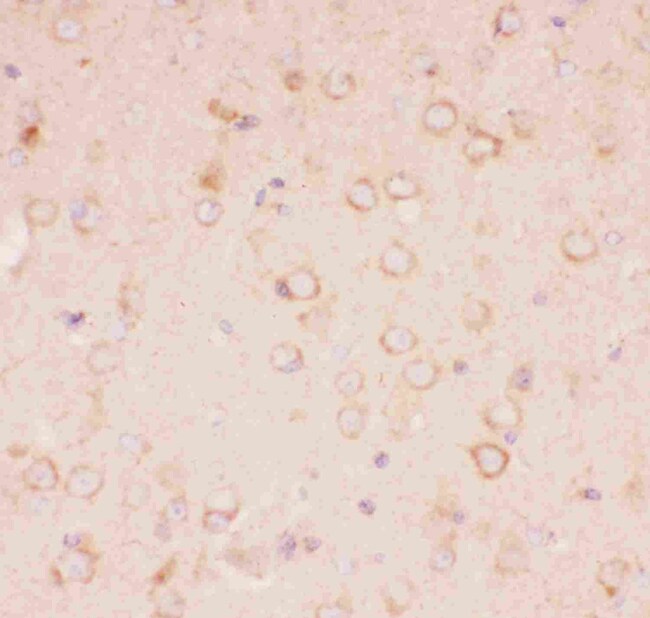
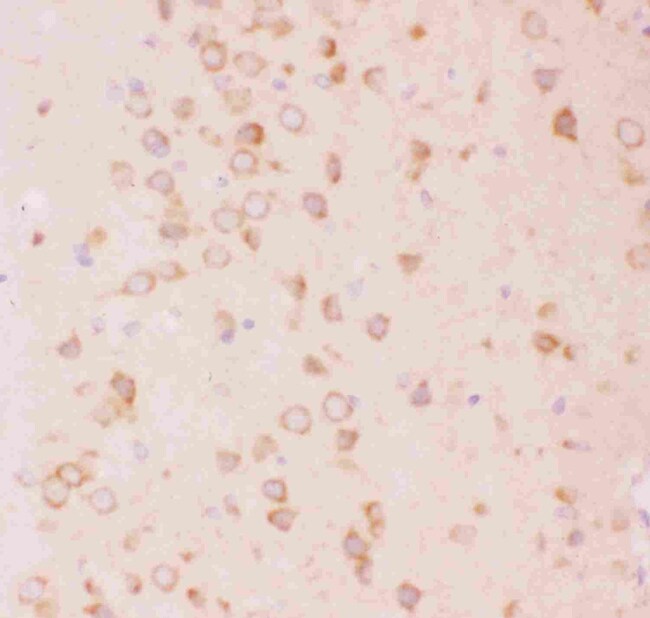
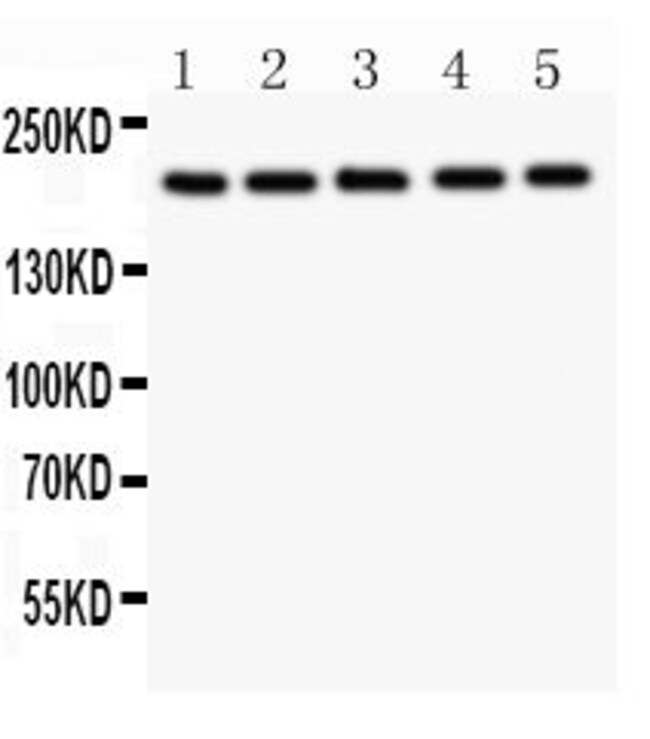
Human Tuberin shares 94% and 90% amino acid (aa) sequences identity with mouse and rat Tuberin, respectively. Reconstitute with 0.2 mL of distilled water to yield a concentration of 500 μg/mL. Positive Control - WB: human U20S whole cell, human PANC whole cell, human HepG2 whole cell, human A549 whole cell, human COLO320 whole cell. IHC: rat brain tissue, mouse brain tissue, human mammary cancer tissue. Store at -20°C for one year from date of receipt. After reconstitution, at 4°C for one month. It can also be aliquotted and stored frozen at -20°C for six months. Avoid repeated freeze-thaw cycles.

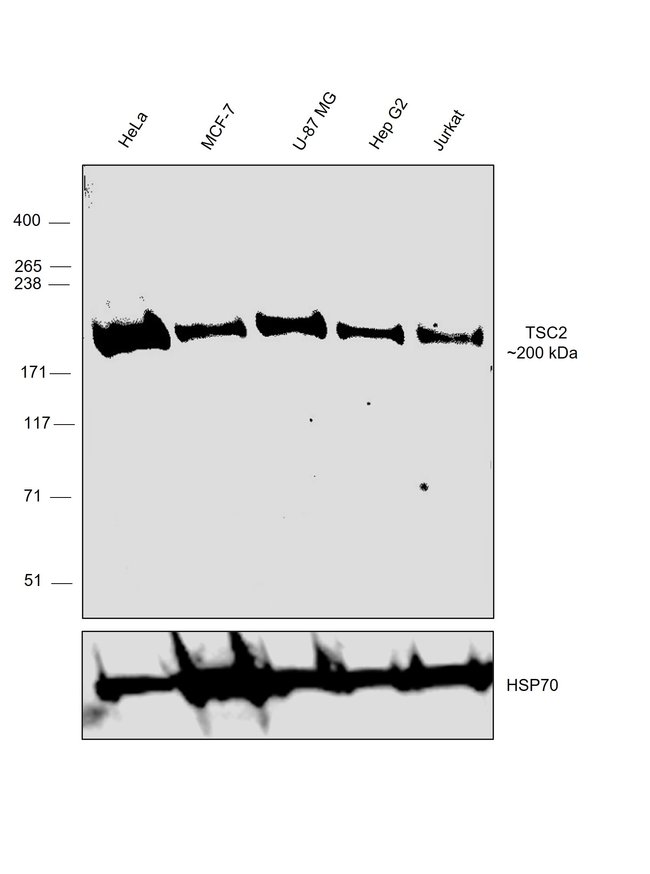
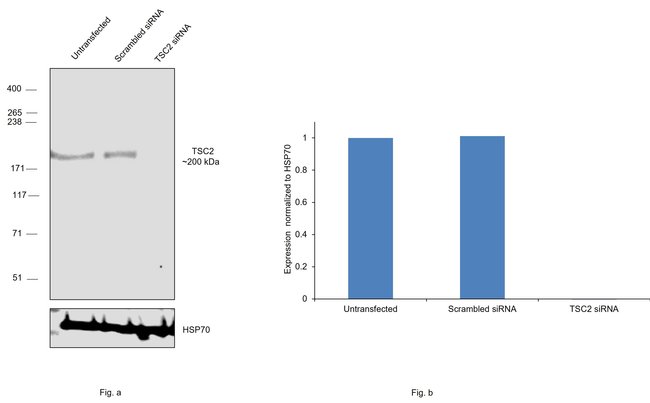
TSC2 (Tuberin, Tuberous sclerosis complex, TSC Complex Subunit 2), is implicated as a tumor suppressor and may function in vesicular transport, play a role in the regulation of cell growth arrest and in the regulation of transcription mediated by steroid receptors. TSC2 associates with hamartin in a cytosolic complex, possibly acting as a chaperone for hamartin. Phosphorylation of tuberin on Ser 939 and Thr 1462 regulates its interaction with hamartin, and is stimulated by various growth factors through the phosphoinositide 3-kinase/Akt pathway. TSC2 may have a function in vesicular transport, but may also play a role in the regulation of cell growth arrest and in the regulation of transcription mediated by steroid receptors. Interaction between TSC1 and TSC2 may facilitate vesicular docking. TSC2 specifically stimulates the intrinsic GTPase activity of the Ras related protein RAP1A and RAB5, suggesting a possible mechanism for its role in regulating cellular growth. Mutations in TSC2 lead to constitutive activation of RAP1A in tumors and are involved in diseases such as lymphangioleiomyomatosis and TSC2 angiomyolipoma. Alternative splicing results in transcript variants of three different isoforms of TSC2.
TRUSTED_SUSTAINABILITY

Especificaciones

Antígeno TSC2
Aplicaciones Immunohistochemistry (Paraffin), Western Blot, Immunocytochemistry
Clasificación Polyclonal
Concentración 500 μg/mL
Conjugado Unconjugated
Formulación PBS with 5mg BSA and 0.05mg sodium azide
génica TSC2
N.º de referencia del gen P49815, P49816, Q61037
Alias de gen LAM; Nafld; OTTHUMP00000198394; PPP1R160; protein phosphatase 1, regulatory subunit 160; Rc; renal carcinoma; Tcs2; Tsc2; TSC4; Tuberin; tuberous sclerosis 2; tuberous sclerosis 2 homolog protein; tuberous sclerosis 2 protein; Tuberous sclerosis 2 protein homolog
Símbolos de los genes TSC2
Especie del huésped Rabbit
Inmunógeno E.coli-derived human Tuberin recombinant protein (Position: H1611-V1807).
Método de purificación Affinity chromatography
Cantidad 100 μg
Estado normativo RUO
Primario o secundario Primary
ID de gen (Entrez) 22084, 24855, 7249
Especies diana Human, Mouse, Rat
Contenido y almacenamiento -20°C
Tipo de producto Antibody
Formulario Lyophilized
Isotype IgG
Mostrar más Mostrar menos
Título del producto
Seleccione un problema

Al hacer clic en Enviar, acepta que Fisher Scientific se ponga en contacto con usted en relación con los comentarios que ha proporcionado en este formulario. No compartiremos su información para ningún otro fin. Toda la información de contacto proporcionada se mantendrá de acuerdo con nuestra Política de Privacidad. Política de privacidad.