missing translation for 'onlineSavingsMsg'
Learn More
Learn More
Invitrogen™ TMEM119 Polyclonal Antibody

Descripción
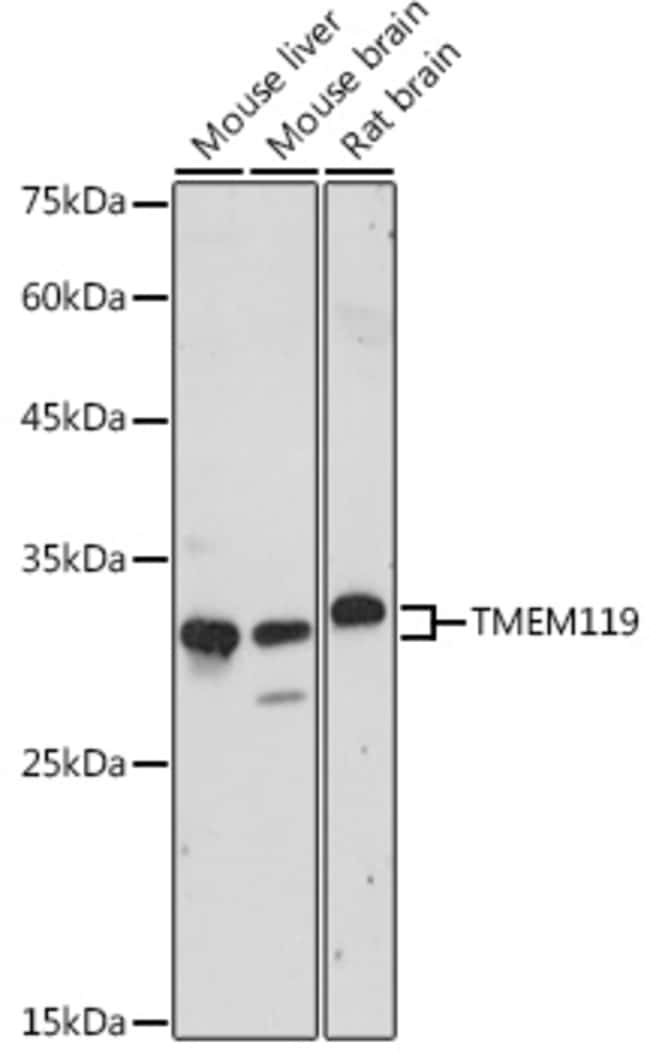
Positive test controls include: Mouse liver, Mouse brain, Rat brain. Immunogen sequence: SRPEEALDSS RQLQADILAA TQNLKSPTRA ALGGGDGARM VEGRGAEEEE KGSQEGDQEV QGHGVPVETP EAQEEPCSGV LEGAVVAGEG QGELEGSLLL AQEAQGPVGP P.
Tmem119 encodes a single-pass type I transmembrane protein which seems to interact with a multitude of micro-RNAs as well as certain transcription factors such as SMAD1, SMAD5 and RUNX2. Tmem119 has been identified as a surface marker of microglia that can be used to reliably distinguish microglia from infiltrating macrophages. Microglial cells are phagocytes that are restricted to the brain and involved in clearing up debris and dendrite pruning of neurons. They display a high functional plasticity, balancing neuroprotective and neurotoxic functions, which is reflected by their distinct physiology in response to changes in their microenvironment. Microglia are particularly mobile in areas of the brain undergoing restructuring. Reactive microglia co-express the marker Iba1. In a pathological context, microglia have been associated with differentiation of pathogenic/inflammatory A1 type astrocytes by secretion of Cq1, IL-1a and TNF when stimulated with LPS, and thought to contribute to the pathology of several neurodegenerative diseases such as Alzheimers, Parkinsons, Chorea Huntingtons disease and Multiple Sclerosis. The specific function Tmem119 plays on microglial cells remains unclear. Outside of the neural system, Tmem119 seems to be involved in osteoblast differentiation/ossification.

Especificaciones
Especificaciones
| Antígeno | TMEM119 |
| Aplicaciones | ELISA, Western Blot |
| Clasificación | Polyclonal |
| Concentración | 2.11 mg/mL |
| Conjugado | Unconjugated |
| Formulación | PBS with 50% glycerol and 0.01% thimerosal; pH 7.3 |
| génica | TMEM119 |
| N.º de referencia del gen | Q8R138 |
| Alias de gen | AW208946; BC025600; OBIF; Osteoblast induction factor; PSEC0199; Tmem119; Transmembrane protein 119; UNQ731/PRO1415 |
| Símbolos de los genes | TMEM119 |
| Mostrar más |
Título del producto
Al hacer clic en Enviar, acepta que Fisher Scientific se ponga en contacto con usted en relación con los comentarios que ha proporcionado en este formulario. No compartiremos su información para ningún otro fin. Toda la información de contacto proporcionada se mantendrá de acuerdo con nuestra Política de Privacidad. Política de privacidad.
¿Detecta una oportunidad de mejora?