Learn More
Invitrogen™ RAGE Monoclonal Antibody (5C6C1)

Descripción
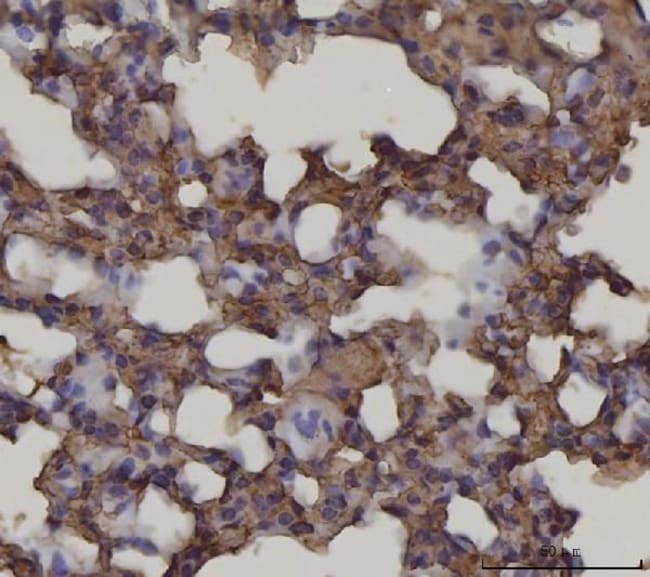
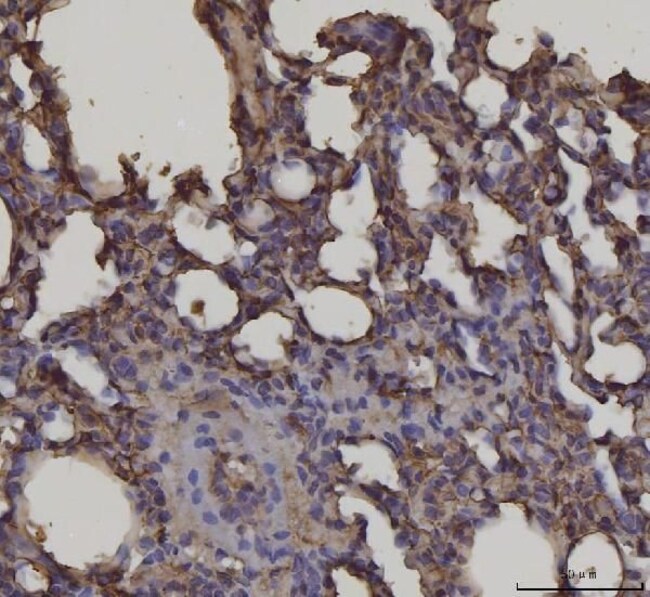
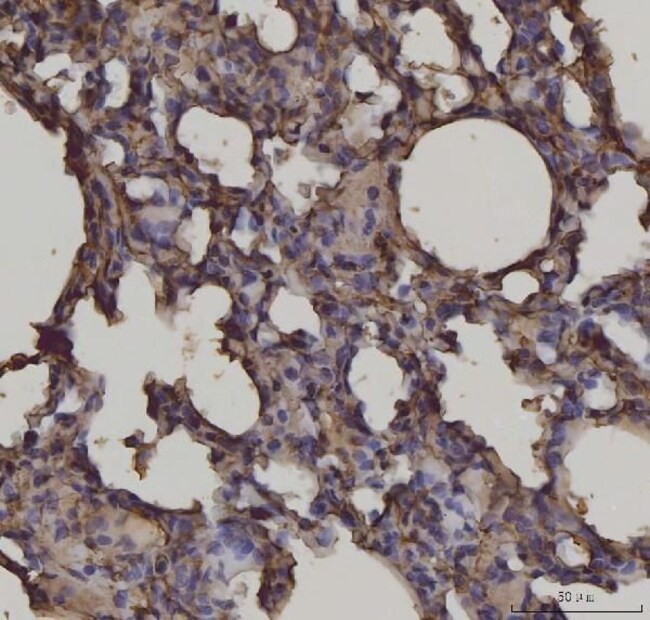
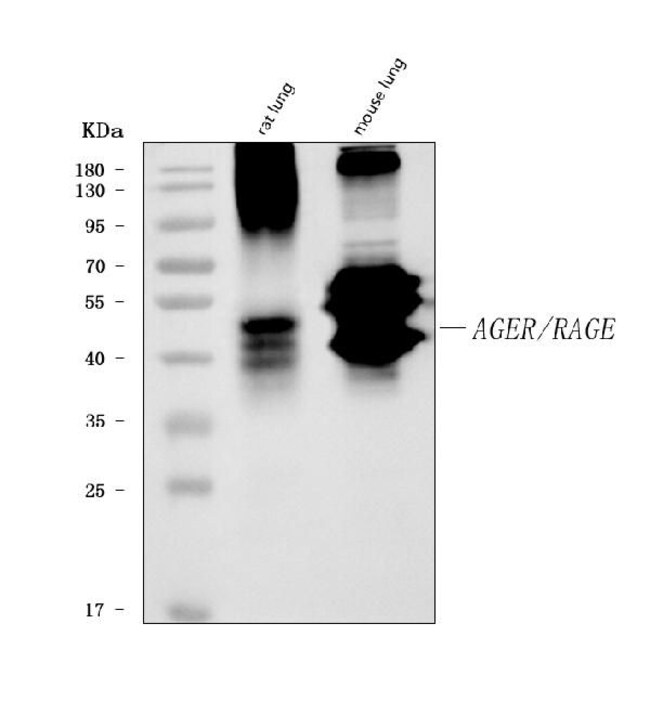
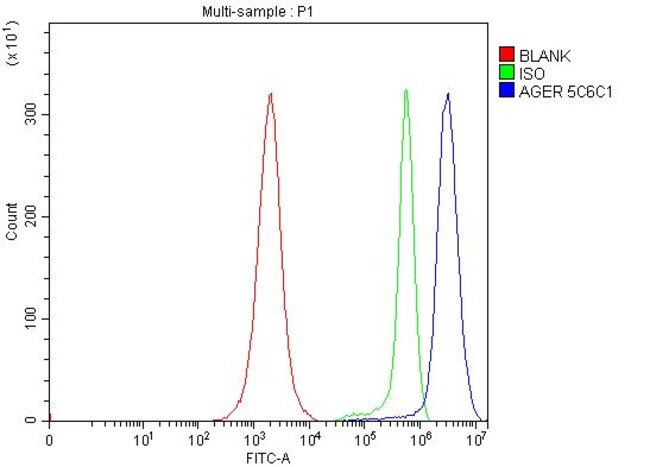
Adding 0.2 mL of distilled water will yield a concentration of 500 μg/mL. Immunogen sequence is different from the related mouse and rat sequences by six amino acids. Positive Control - WB: rat lung tissue, mouse lung tissue. IHC: mouse lung tissue, rat lung tissue, rat lung tissue. Flow: Jurkat cell. Store at -20°C for one year from date of receipt. After reconstitution, at 4°C for one month. It can also be aliquotted and stored frozen at -20°C for six months. Avoid repeated freeze-thaw cycles.

Especificaciones
Especificaciones
| Antígeno | RAGE |
| Aplicaciones | Flow Cytometry, Immunohistochemistry (Paraffin), Western Blot |
| Clasificación | Monoclonal |
| Clon | 5C6C1 |
| Concentración | 500 μg/mL |
| Conjugado | Unconjugated |
| Formulación | PBS with 4mg trehalose and no preservative |
| génica | AGER |
| N.º de referencia del gen | Q15109, Q62151, Q63495 |
| Alias de gen | advanced glycation end product receptor; advanced glycation end-product receptor; advanced glycation end-products receptor; advanced glycosylation end product-specific receptor; advanced glycosylation end product-specific receptor variant 2; advanced glycosylation end product-specific receptor variant 3; advanced glycosylation end product-specific receptor variant 4; advanced glycosylation end product-specific receptor variant 5; advanced glycosylation end-product specific receptor; Ager; MAPK/MAK/MRK overlapping kinase; MOK; MOK protein kinase; RAGE; RAGE isoform NtRAGE-delta; RAGE isoform sRAGE-delta; RAGE/AGER; RAGE1; RAGE-1; RAGE-4 ORF3; receptor for advanced glycation endproducts; receptor for advanced glycation end-products variant 20; receptor for advanced glycosylation end products; receptor of advanced glycosylation end products of proteins; immunoglobulin superfamily; MHC class II; MHC class III; renal cell carcinoma antigen; renal tumor antigen 1; SCARJ1; sRAGE; STK30 |
| Mostrar más |
Al hacer clic en Enviar, acepta que Fisher Scientific se ponga en contacto con usted en relación con los comentarios que ha proporcionado en este formulario. No compartiremos su información para ningún otro fin. Toda la información de contacto proporcionada se mantendrá de acuerdo con nuestra Política de Privacidad. Política de privacidad.