missing translation for 'onlineSavingsMsg'
Learn More
Learn More

Invitrogen™ LPPR5 Polyclonal Antibody

Description
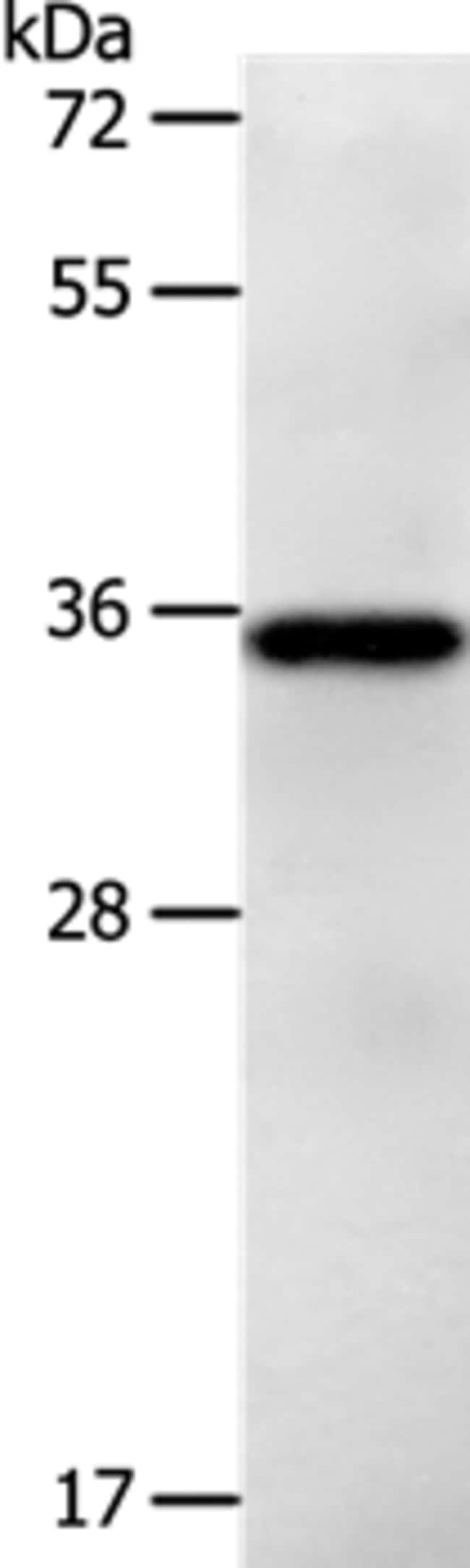
The antibody detects endogenous levels of total PAP2D / LPPR5 protein.
The protein encoded by this gene is a type 2 member of the phosphatidic acid phosphatase (PAP) family. All type 2 members of this protein family contain 6 transmembrane regions, and a consensus N-glycosylation site. PAPs convert phosphatidic acid to diacylglycerol, and function in de novo synthesis of glycerolipids as well as in receptor-activated signal transduction mediated by phospholipase D. Alternate transcriptional splice variants, encoding different isoforms, have been characterized. [provided by RefSeq, Jul 2008] Induces filopodia formation and promotes neurite growth in a CDC42-independent manner; impedes neurite growth inhibitory-mediated axonal retraction.

Specifications
Specifications
| Antígeno | LPPR5 |
| Aplicaciones | Western Blot |
| Clasificación | Polyclonal |
| Concentración | 2.4 mg/mL |
| Conjugado | Unconjugated |
| Formulación | PBS with 40% glycerol and 0.05% sodium azide; pH 7.4 |
| génica | PLPPR5 |
| N.º de referencia del gen | Q32ZL2, Q8BJ52 |
| Alias de gen | 4833424O15Rik; Lipid phosphate phosphatase-related protein type 5; Lppr5; PAP2; Pap2d; phosphatidic acid phosphatase 2d; phosphatidic acid phosphatase type 2; phosphatidic acid phosphatase type 2d; phospholipid phosphatase related 5; phospholipid phosphatase-related protein type 5; Plasticity-related gene 5 protein; plasticity-related protein 5; PLPPR5; PRG5; PRG-5 |
| Símbolos de los genes | PLPPR5 |
| Show More |
Product Title
By clicking Submit, you acknowledge that you may be contacted by Fisher Scientific in regards to the feedback you have provided in this form. We will not share your information for any other purposes. All contact information provided shall also be maintained in accordance with our Privacy Policy.
Spot an opportunity for improvement?