missing translation for 'onlineSavingsMsg'
Learn More
Learn More
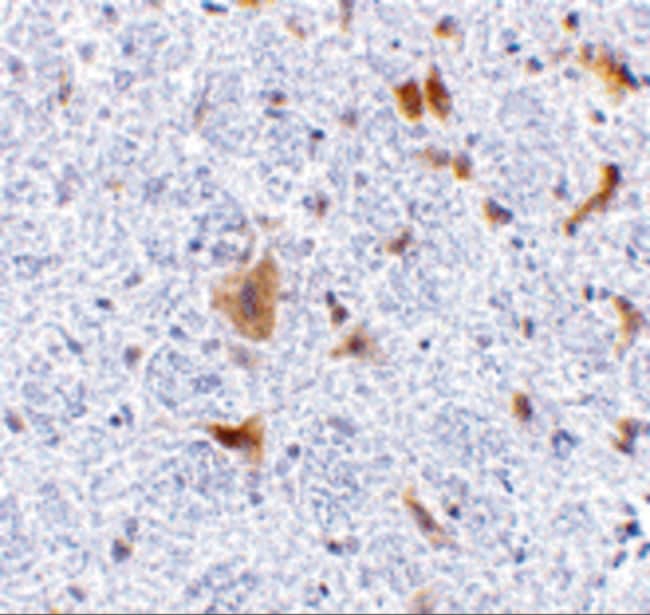
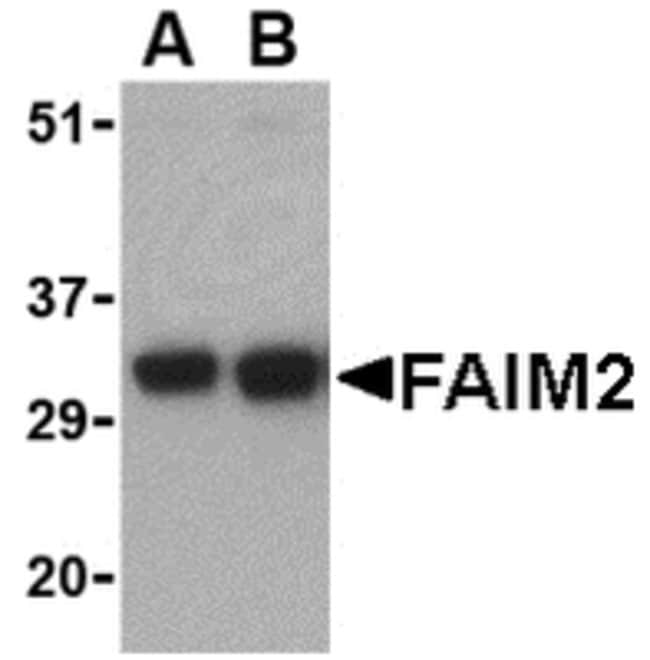
Invitrogen™ LFG Polyclonal Antibody

Descripción
A suggested positive control is EL4 cell lysate. PA5-20311 can be used with blocking peptide PEP-0431.
LFG, a seven transmembrane spanning protein, is a recently identified member of a family whose members can inhibit apoptotic cell death induced by Fas receptor. LFG is a human homolog of rat NMP35 and consists of a conserved transmembrane domain and a small cytoplasmic domain. Reports have shown that LFG protects the cell from Fas-mediated neuronal cell death in a novel way. LFG binds to Fas receptor but doesn't have any effect in reducing Fas expression or decreasing the ability of FADD binding to the receptor. Furthermore, LFG doesn't protect the cells from TNF-alpha mediated cell death process. Although LFG is ubiquitously expressed, Northern blot analysis detected an increased expression in hippocampus and other neural tissues, suggesting a protective role in neurodegenerative diseases.

Especificaciones
Especificaciones
| Antígeno | LFG |
| Aplicaciones | Immunohistochemistry, Western Blot |
| Clasificación | Polyclonal |
| Concentración | 1 mg/mL |
| Conjugado | Unconjugated |
| Formulación | PBS with 0.02% sodium azide |
| génica | FAIM2 |
| N.º de referencia del gen | O88407, Q8K097, Q9BWQ8 |
| Alias de gen | 2900002L20Rik; FAIM2; Fas apoptotic inhibitory molecule 2; fas apoptotic inhibitory molecule 2; protein lifeguard 2; Kiaa0950; Lfg; LFG2; lifeguard; neural membrane protein 35; NGP35; NMP25; Nmp35; protein lifeguard; protein lifeguard 2; TMBIM2; transmembrane BAX inhibitor motif-containing protein 2 |
| Símbolos de los genes | FAIM2 |
| Mostrar más |
Título del producto
Al hacer clic en Enviar, acepta que Fisher Scientific se ponga en contacto con usted en relación con los comentarios que ha proporcionado en este formulario. No compartiremos su información para ningún otro fin. Toda la información de contacto proporcionada se mantendrá de acuerdo con nuestra Política de Privacidad. Política de privacidad.
¿Detecta una oportunidad de mejora?