missing translation for 'onlineSavingsMsg'
Learn More
Learn More
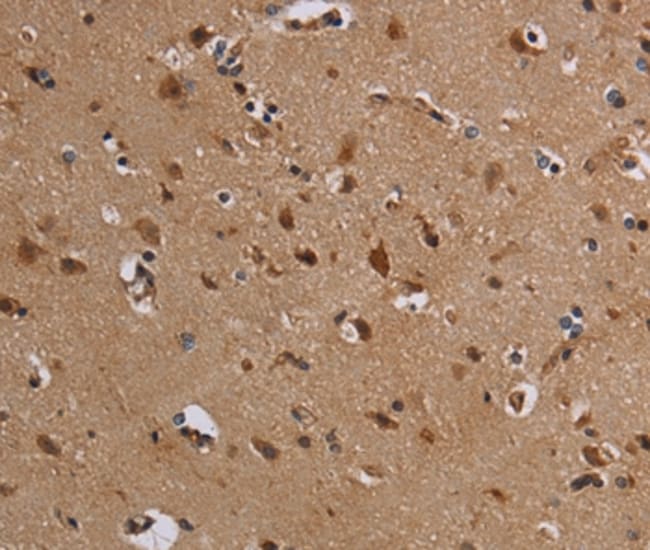
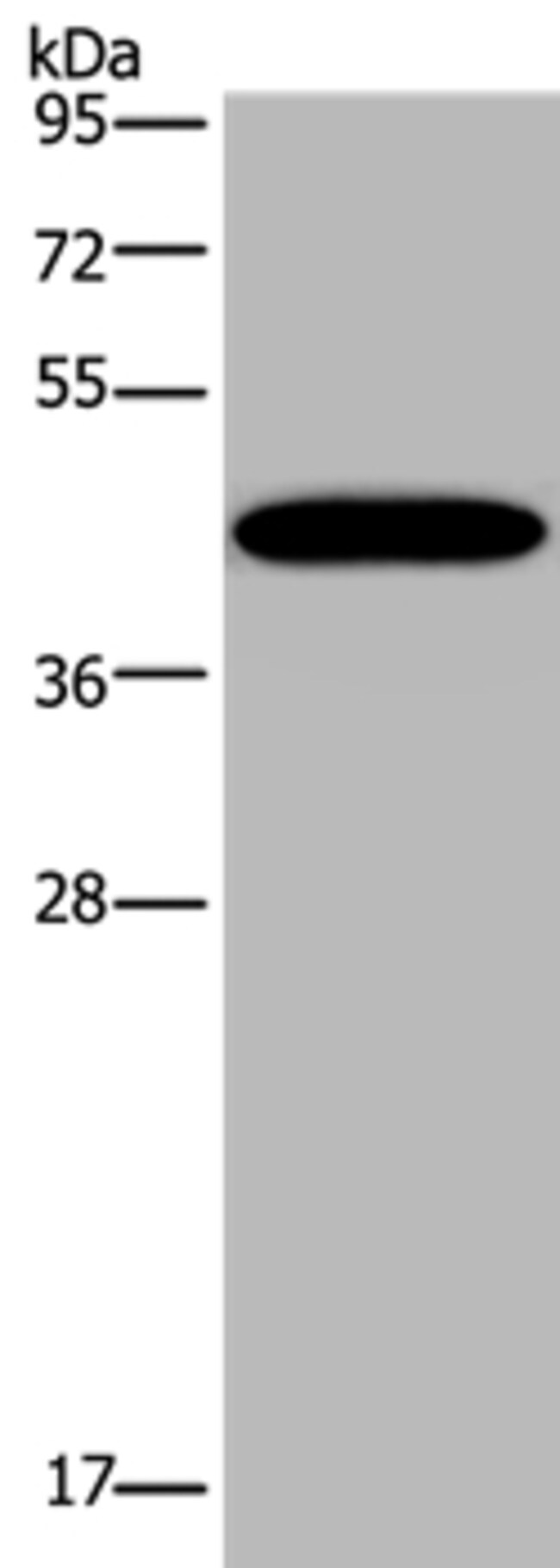
Invitrogen™ KCNK13 Polyclonal Antibody

Descripción
The antibody detects endogenous levels of total KCNK13 protein.
Potassium channels represent the most complex class of voltage-gated ion channels from both functional and structural standpoints. Their diverse functions include regulating neurotransmitter release, heart rate, insulin secretion, neuronal excitability, epithelial electrolyte transport, smooth muscle contraction, and cell volume. This gene encodes a potassium channel containing two pore-forming domains. This protein is an open channel that can be stimulated by arachidonic acid and inhibited by the anesthetic halothane.

Especificaciones
Especificaciones
| Antígeno | KCNK13 |
| Aplicaciones | Immunohistochemistry (Paraffin), Western Blot |
| Clasificación | Polyclonal |
| Concentración | 2 mg/mL |
| Conjugado | Unconjugated |
| Formulación | PBS with 40% glycerol and 0.05% sodium azide; pH 7.4 |
| génica | KCNK13 |
| N.º de referencia del gen | Q8R1P5, Q9HB14 |
| Alias de gen | BB085247; F730021E22Rik; Gm1570; Gm1685; K2p13.1; K2P13.1 potassium channel; KCNK13; Potassium channel subfamily K member 13; potassium channel, subfamily K, member 13; potassium channel, two pore domain subfamily K, member 13; potassium two pore domain channel subfamily K member 13; prdx1; Tandem pore domain halothane-inhibited potassium channel 1; tandem pore domain potassium channel THIK-1; THIK1; THIK-1 |
| Símbolos de los genes | KCNK13 |
| Mostrar más |
Título del producto
Al hacer clic en Enviar, acepta que Fisher Scientific se ponga en contacto con usted en relación con los comentarios que ha proporcionado en este formulario. No compartiremos su información para ningún otro fin. Toda la información de contacto proporcionada se mantendrá de acuerdo con nuestra Política de Privacidad. Política de privacidad.
¿Detecta una oportunidad de mejora?