missing translation for 'onlineSavingsMsg'
Learn More

Invitrogen™ GRK2 Recombinant Rabbit Monoclonal Antibody (ST05-60)
GREENER_CHOICE

Código de producto. 16335604
Change view
Click to view available options
Cantidad:
100 μL
Tamaño de la unidad:
100 microlitros
1 product options available for selection
Product selection table with 1 available options. Use arrow keys to navigate and Enter or Space to select.
Código de producto. Cantidad unitSize
16335604 100 μL 100 microlitros
Use arrow keys to navigate between rows. Press Enter or Space to select a product option. 1 options available.
1 options
This item is not returnable. View return policy
Product Code. 16335604 Supplier Invitrogen™ Supplier No. MA532181

Por favor, para comprar este producto. ¿No tiene usuario web? Regístrese hoy mismo.

This item is not returnable. View return policy

Rabbit Recombinant Monoclonal Antibody

Recombinant rabbit monoclonal antibodies are produced using in vitro expression systems. The expression systems are developed by cloning in the specific antibody DNA sequences from immunoreactive rabbits. Then, individual clones are screened to select the best candidates for production. The advantages of using recombinant rabbit monoclonal antibodies include: better specificity and sensitivity, lot-to-lot consistency, animal origin-free formulations, and broader immunoreactivity to diverse targets due to larger rabbit immune repertoire.

ADRBK1 (GRK2) is a serine/threonine kinase. Many of the G protein-coupled receptors are known to be phosphorylated by G protein-dependent receptor kinases (GRKs). G protein-coupled receptor kinases (GRKs) are important regulators of G protein-coupled receptors(GPCRs). GRK2 (83 kDa), one of six members of this family that have been identified, is ubiquitously expressed in mammals. After binding to their ligand and interacting with heterotrimeric G proteins, GPCRs (e.g., a2-adrenergic receptor) are phosphorylated by GRKs. Internalization of the GPCRs, regulated by beta-arrestin-1, leads to activation of the Ras - Raf - ERK1&2 signaling pathway. GRK2 activity is tightly controlled by different mechanisms including phosphorylation by kinases such as PKC, Src and ERK1&2, as well as interaction with various proteins. ERK phosphorylates and thus inactivates GRK2 on serine 670 in a negative feedback mechanism.
TRUSTED_SUSTAINABILITY

Specifications

Antígeno GRK2
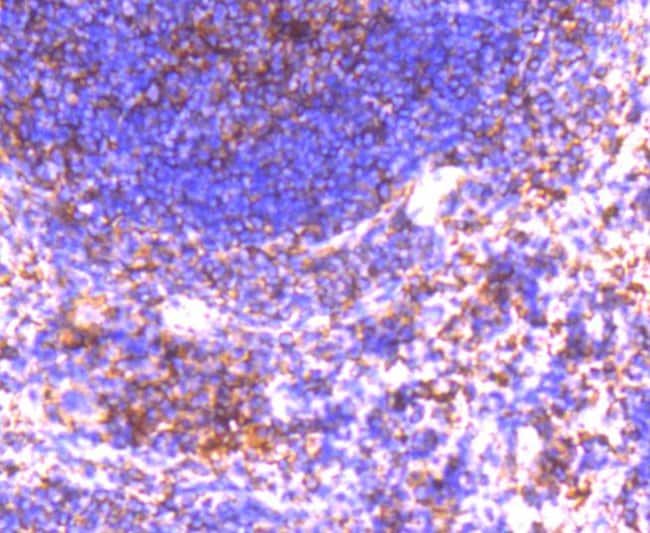
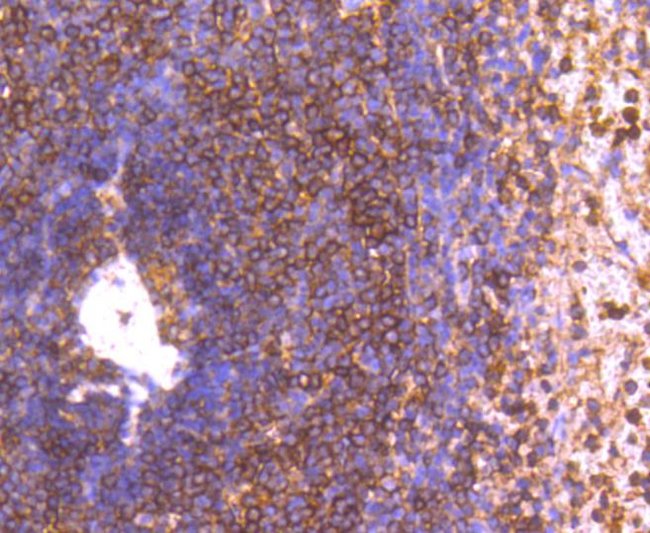
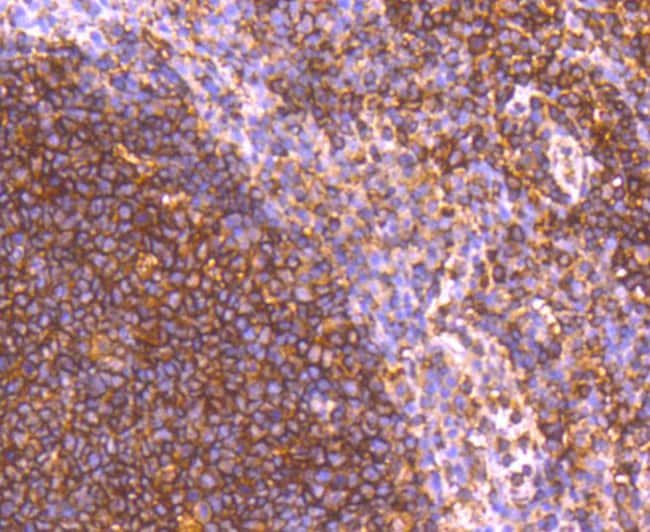
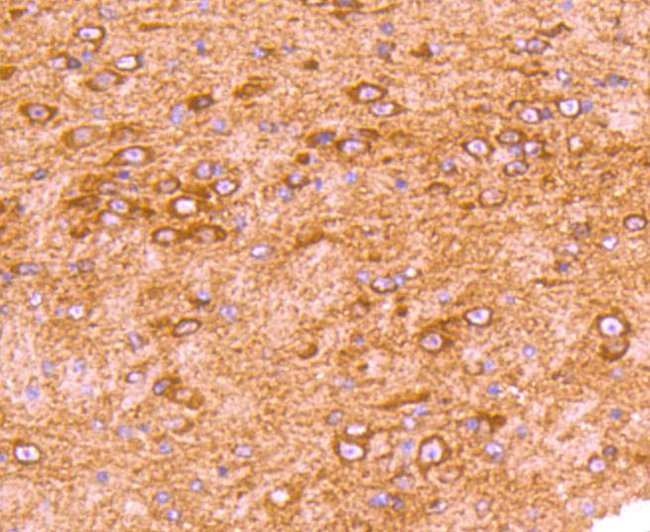
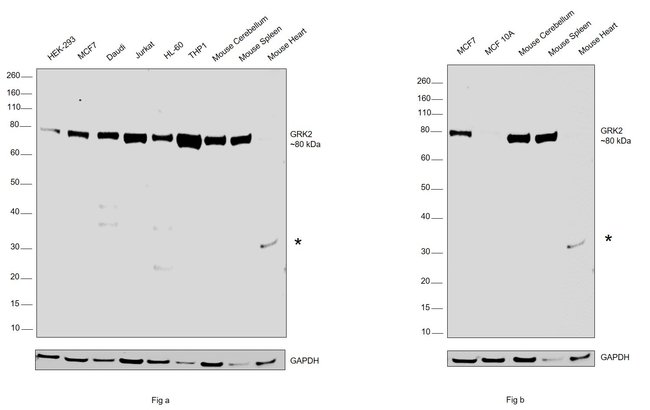
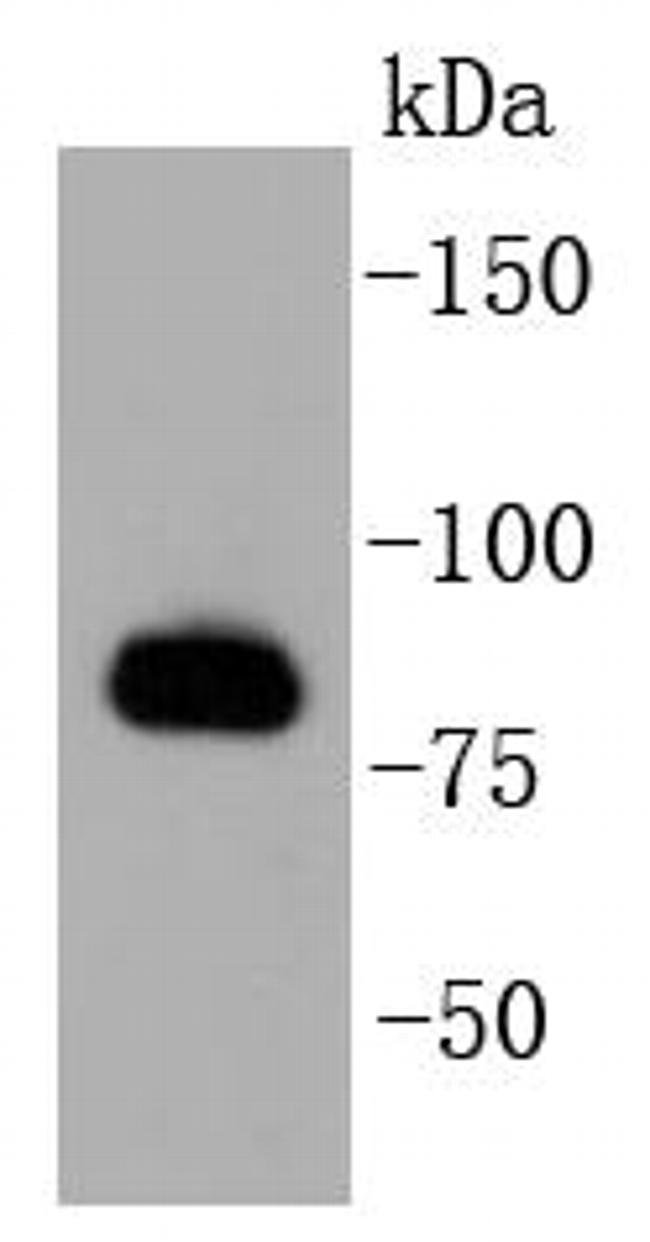
Aplicaciones Immunohistochemistry (Paraffin), Western Blot
Clasificación Recombinant Monoclonal
Clon ST05-60
Concentración 1 mg/mL
Conjugado Unconjugated
Formulación TBS with 40% Glycerol, 0.05% BSA and 0.05% sodium azide; pH 7.4
génica GRK2
N.º de referencia del gen P25098, P26817, Q99MK8
Alias de gen ADRBK1; Adrbk-1; adrenergic beta receptor kinase 1; adrenergic receptor kinase, beta 1; adrenergic, beta, receptor kinase 1; BARK; BARK1; Bark-1; beta ARK; Beta-adrenergic receptor kinase 1; beta-adrenergic receptor kinase 1 beta ARK1; beta-AR kinase-1; betaARK1; BETA-ARK1; beta-ARK-1; EC 2.7.1.126; G protein-coupled receptor kinase 2; G-protein coupled receptor kinase 2; G-protein-coupled receptor kinase 2; grk 2; Grk2; GRK-2
Símbolos de los genes GRK2
Especie del huésped Rabbit
Inmunógeno Synthetic peptide within Human GRK2 aa 640-689.
Método de purificación Protein A
Cantidad 100 μL
Estado normativo RUO
Primario o secundario Primary
ID de gen (Entrez) 110355, 156, 25238
Especies diana Human, Mouse, Rat
Contenido y almacenamiento Store at 4°C short term. For long term storage, store at -20°C, avoiding freeze/thaw cycles.
Tipo de producto Antibody
Formulario Liquid
Isotype IgG
Show More Show Less
Product Title
Select an issue

By clicking Submit, you acknowledge that you may be contacted by Fisher Scientific in regards to the feedback you have provided in this form. We will not share your information for any other purposes. All contact information provided shall also be maintained in accordance with our Privacy Policy.