missing translation for 'onlineSavingsMsg'
Learn More

Invitrogen™ EpCAM Monoclonal Antibody (VU-1D9)
GREENER_CHOICE

Código de producto. 15367840
Change view
Click to view available options
Cantidad:
500 μg
Tamaño de la unidad:
500 microgramos
1 product options available for selection
Product selection table with 1 available options. Use arrow keys to navigate and Enter or Space to select.
Código de producto. Cantidad unitSize
15367840 500 μg 500 microgramos
Use arrow keys to navigate between rows. Press Enter or Space to select a product option. 1 options available.
1 options
Este artículo no se puede devolver. Vea la política de devoluciones
Código de producto. 15367840 Proveedor Invitrogen™ N.º de proveedor MA516973

Por favor, para comprar este producto. ¿No tiene usuario web? Regístrese hoy mismo.

Este artículo no se puede devolver. Vea la política de devoluciones

Mouse Monoclonal Antibody

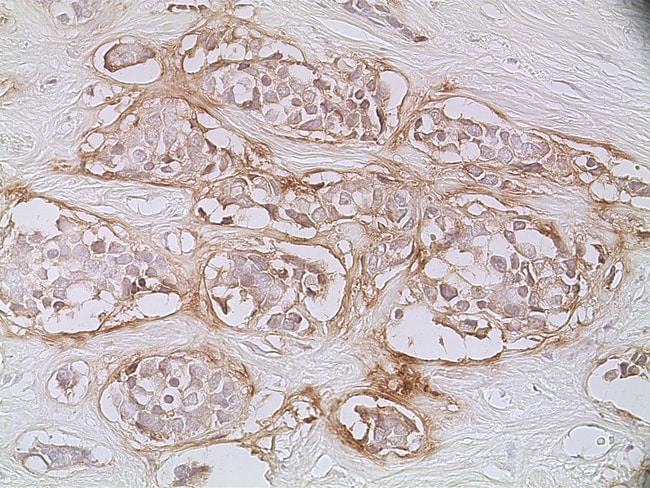
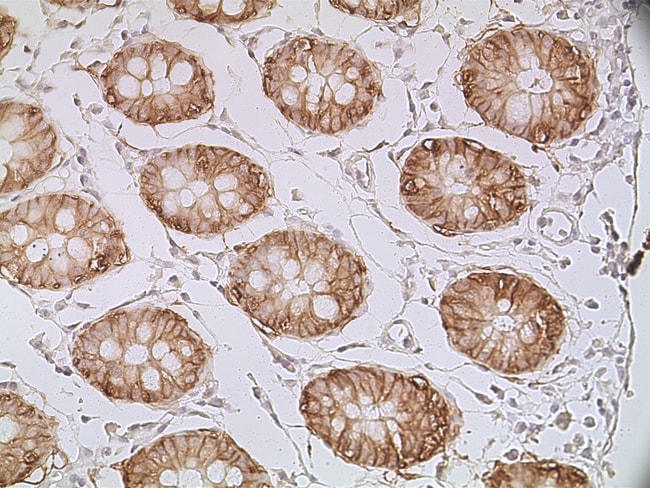
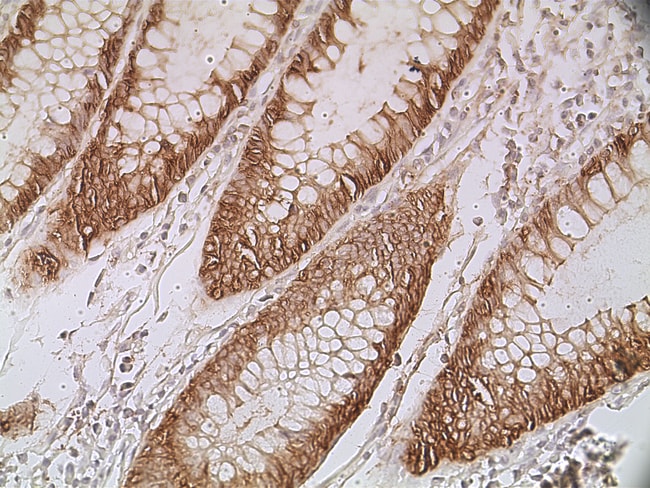
This product requires protein digestion pre-treatment of paraffin sections using trypsin or pronase. A suggested positive control for immunohistochemical applications is large bowel. For FACS analysis, use 10 μL of the suggested working dilution to label 1x10^6 cells in 100 μL. This product is a low-endotoxin, preservative-free formulation. Mouse anti Human CD326 antibody, clone VU-1D9 recognizes epithelial cell adhesion molecule (Ep-CAM), a approximately 34 kDa cell surface antigen otherwise known as CD326, MOC31 or Ber-EP4.

Ep-CAM (epithelial adhesion molecule, epithelial specific antigen, ESA) is a transmembrane glycoprotein expressed in the epithelium with a molecular weight of approximately 40 kDa, which functions as an epithelial cell adhesion molecule. Ep-CAM functions as a homotypic calcium-independent cell adhesion molecule, and has a direct impact on cell cycle, proliferation and metabolism of epithelial cells and fibroblasts due to its ability to rapidly induce the proto-oncogene c-myc and the cell cycle regulating genes cyclin A and E. Ep-CAM mediates Ca2+-independent homotypic interactions. Formation of Ep-CAM-mediated adhesions have a negative regulatory effect on adhesions mediated by classic cadherins, which may have strong effects on the differentiation and growth of epithelial cells. Ep-CAM overexpression was suggested to be associated with enhanced epithelial proliferation. Ep-CAM is highly expressed in human carcinomas, and is a marker for tumors of epithelial lineage. Ep-CAM is expressed on baso-lateral cell surface in most simple epithelia and many carcinoma types. Also, Ep-CAM reportedly distinguishes adenocarcinomas from pleural mesotheliomas.
TRUSTED_SUSTAINABILITY

Especificaciones

Antígeno EpCAM
Aplicaciones Flow Cytometry, Immunohistochemistry (Frozen), Immunohistochemistry (Paraffin), Immunoprecipitation, Western Blot, Immunocytochemistry
Clasificación Monoclonal
Clon VU-1D9
Concentración 1 mg/mL
Conjugado Unconjugated
Formulación PBS with no preservative
génica EPCAM
N.º de referencia del gen P16422
Alias de gen adenocarcinoma-associated antigen; CD326; cell surface glycoprotein Trop-1; DIAR5; EGP; EGP-2; EGP314; EGP40; EPCAM; Ep-CAM; EpCAM1; epithelial cell adhesion molecule; Epithelial cell surface antigen; Epithelial glycoprotein; Epithelial glycoprotein 314; ESA; GA733-2; gp40; hEGP314; HNPCC8; human epithelial glycoprotein-2; KS 1/4 antigen; KS1/4; KSA; Ly74; lymphocyte antigen 74; M1S2; M4S1; major gastrointestinal tumor-associated protein GA733-2; mEGP314; membrane component, chromosome 4, surface marker (35kD glycoprotein); MIC18; MK-1; panepithelial glycoprotein 314; protein 289A; Protein D5.7A; Tacsd1; Tacstd1; TROP1; Trop-1 protein; Tumor-associated calcium signal transducer 1
Símbolos de los genes EPCAM
Especie del huésped Mouse
Inmunógeno HG9 cell line (small cell lung carcinoma).
Método de purificación Protein A
Cantidad 500 μg
Estado normativo RUO
Primario o secundario Primary
ID de gen (Entrez) 4072
Especies diana Human
Contenido y almacenamiento -20°C, Avoid Freeze/Thaw Cycles
Tipo de producto Antibody
Formulario Liquid
Isotype IgG1
Mostrar más Mostrar menos
Título del producto
Seleccione un problema

Al hacer clic en Enviar, acepta que Fisher Scientific se ponga en contacto con usted en relación con los comentarios que ha proporcionado en este formulario. No compartiremos su información para ningún otro fin. Toda la información de contacto proporcionada se mantendrá de acuerdo con nuestra Política de Privacidad. Política de privacidad.