missing translation for 'onlineSavingsMsg'
Learn More
Learn More
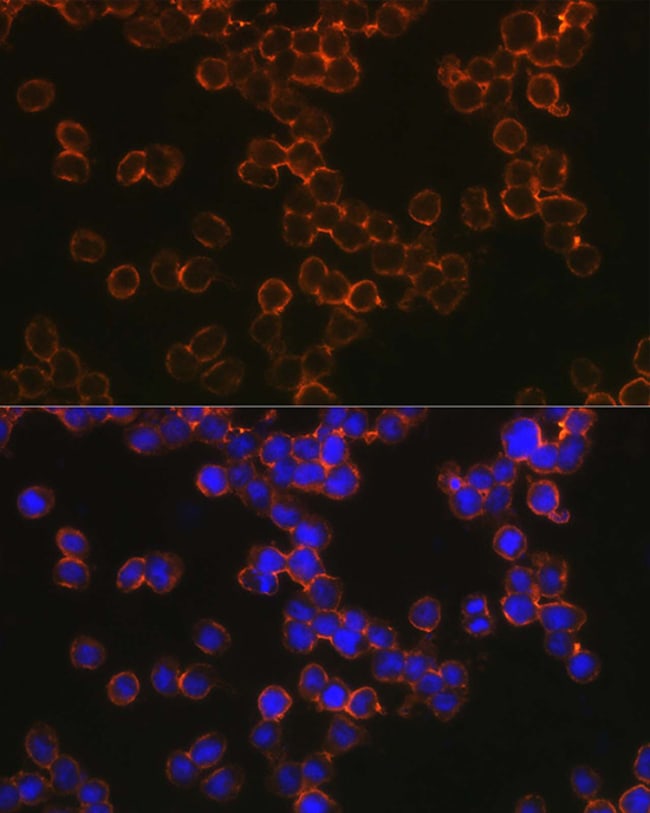
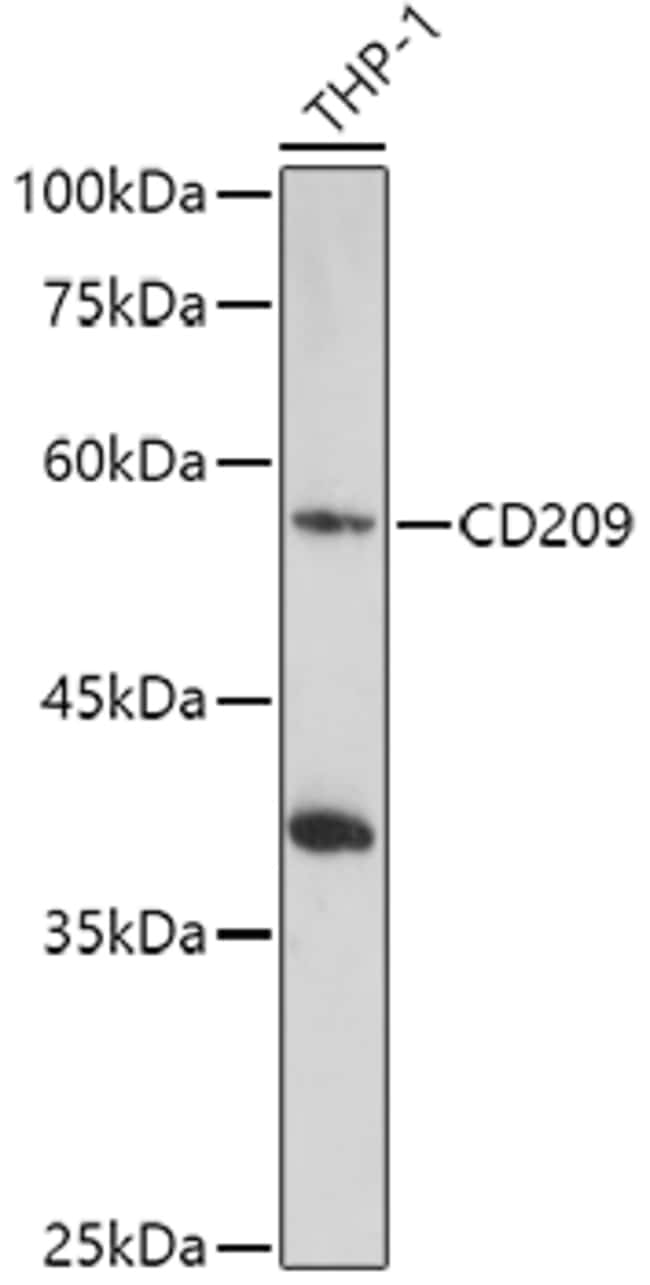
Invitrogen™ DC-SIGN Polyclonal Antibody

Descripción
Positive Samples: NIH/3T3, Mouse liver, Mouse kidney, Rat liver, Rat kidney; Cellular Location: Cell membrane, Single-pass type II membrane protein.
This gene encodes a transmembrane receptor and is often referred to as DC-SIGN because of its expression on the surface of dendritic cells and macrophages. The encoded protein is involved in the innate immune system and recognizes numerous evolutionarily divergent pathogens ranging from parasites to viruses with a large impact on public health. The protein is organized into three distinct domains: an N-terminal transmembrane domain, a tandem-repeat neck domain and C-type lectin carbohydrate recognition domain. The extracellular region consisting of the C-type lectin and neck domains has a dual function as a pathogen recognition receptor and a cell adhesion receptor by binding carbohydrate ligands on the surface of microbes and endogenous cells. The neck region is important for homo-oligomerization which allows the receptor to bind multivalent ligands with high avidity. Variations in the number of 23 amino acid repeats in the neck domain of this protein are rare but have a significant impact on ligand binding ability. This gene is closely related in terms of both sequence and function to a neighboring gene (GeneID 10332; often referred to as L-SIGN). DC-SIGN and L-SIGN differ in their ligand-binding properties and distribution. Alternative splicing results in multiple variants.

Especificaciones
Especificaciones
| Antígeno | DC-SIGN |
| Aplicaciones | ELISA, Western Blot, Immunocytochemistry |
| Clasificación | Polyclonal |
| Concentración | 0.33 mg/mL |
| Conjugado | Unconjugated |
| Formulación | PBS with 50% glycerol and 0.02% sodium azide; pH 7.3 |
| génica | CD209 |
| N.º de referencia del gen | Q91ZX1, Q9NNX6 |
| Alias de gen | CD209; CD209 antigen; CD209 antigen-like protein A; CD209 molecule; Cd209a; CD209a antigen; CD209a molecule; Cd209d; CD209d antigen; CDSIGN; Cire; CLEC4L; Clec4m; C-type lectin domain family 4 member L; C-type lectin domain family 4, member L; C-type lectin domain family 4, member M; Dcsign; DC-SIGN; DC-SIGN1; Dc-signr; DC-SIGN-related protein; Dendritic cell-specific ICAM-3-grabbing non-integrin; dendritic cell-specific ICAM-3-grabbing non-integrin 1; dendritic cell-specific intercellular adhesion molecule-3-grabbing non-integrin; dendritic cell-specific intracellular adhesion molecules (ICAM)-3 grabbing non-integrin; HIV gpl20-binding protein; MGC129965; MGC130443; RGD1561104; SIGN-R1; SIGNR5 |
| Símbolos de los genes | CD209, Cd209a |
| Mostrar más |
Título del producto
Al hacer clic en Enviar, acepta que Fisher Scientific se ponga en contacto con usted en relación con los comentarios que ha proporcionado en este formulario. No compartiremos su información para ningún otro fin. Toda la información de contacto proporcionada se mantendrá de acuerdo con nuestra Política de Privacidad. Política de privacidad.
¿Detecta una oportunidad de mejora?