missing translation for 'onlineSavingsMsg'
Learn More
Learn More
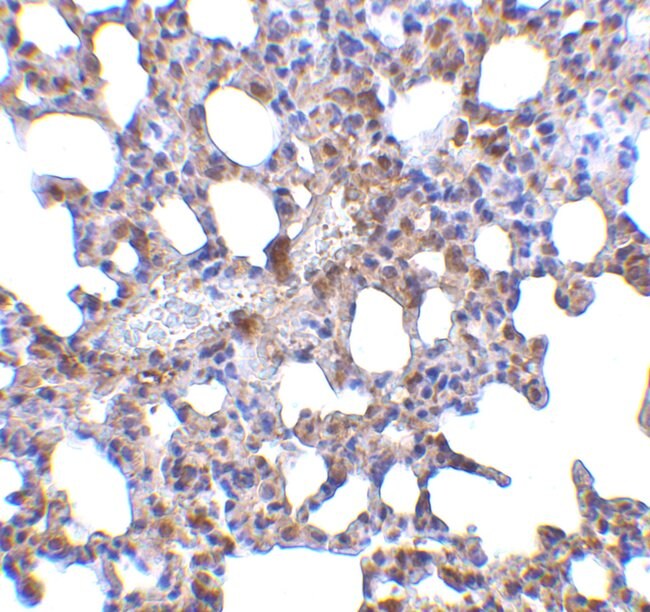
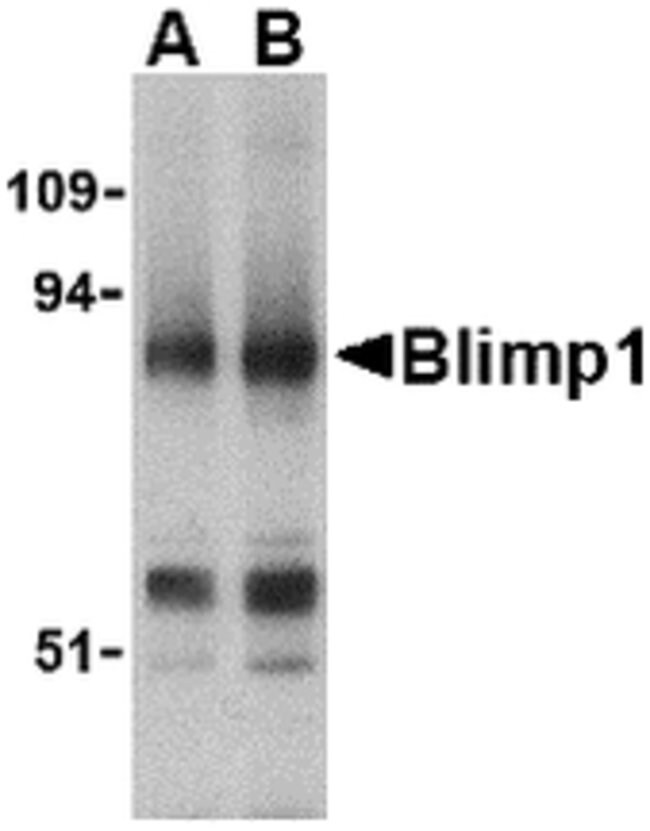
Invitrogen™ Blimp-1 Polyclonal Antibody
Descripción
A suggested positive control is mouse lung tissue lysate. PA5-20313 can be used with blocking peptide PEP-0433.
Blimp-1 (B lymphocyte maturation protein-1) is a nuclear protein with five zinc fingers in its carboxy terminus. It is a transcriptional repressor that is both required and sufficient to trigger terminal differentiation of B lymphocytes and monocyte/macrophages. Blimp-1 is expressed in, and may be required for terminally differentiated epithelial cells, retinal neurons and other lineage cells. It has also been implicated in the repression of beta-interferon (IFN-beta) and c-myc gene expression.

Especificaciones
Especificaciones
| Antígeno | Blimp-1 |
| Aplicaciones | Immunohistochemistry, Western Blot |
| Clasificación | Polyclonal |
| Concentración | 1 mg/mL |
| Conjugado | Unconjugated |
| Formulación | PBS with 0.02% sodium azide |
| génica | PRDM1 |
| N.º de referencia del gen | O75626, Q60636 |
| Alias de gen | B lymphocyte-induced maturation protein 1; b2b1765Clo; Beta-interferon gene positive regulatory domain I-binding factor; beta-interferon gene positive-regulatory domain I binding factor; BLIMP 1; Blimp1; BLIMP-1; B-lymphocyte-induced maturation protein 1; MGC118922; MGC118923; MGC118924; MGC118925; OTTHUMP00000016918; OTTHUMP00000202173; Positive regulatory domain I-binding factor 1; PR domain 1; PR domain containing 1, with ZNF domain; PR domain zinc finger protein 1; PR domain-containing protein 1; PR/SET domain 1; PRDI BF1; PRDI-BF1; PRDI-binding factor-1; Prdm1; RP1-134E15.1; ZNFPR1A1 |
| Símbolos de los genes | PRDM1 |
| Mostrar más |
Título del producto
Al hacer clic en Enviar, acepta que Fisher Scientific se ponga en contacto con usted en relación con los comentarios que ha proporcionado en este formulario. No compartiremos su información para ningún otro fin. Toda la información de contacto proporcionada se mantendrá de acuerdo con nuestra Política de Privacidad. Política de privacidad.
¿Detecta una oportunidad de mejora?