Learn More
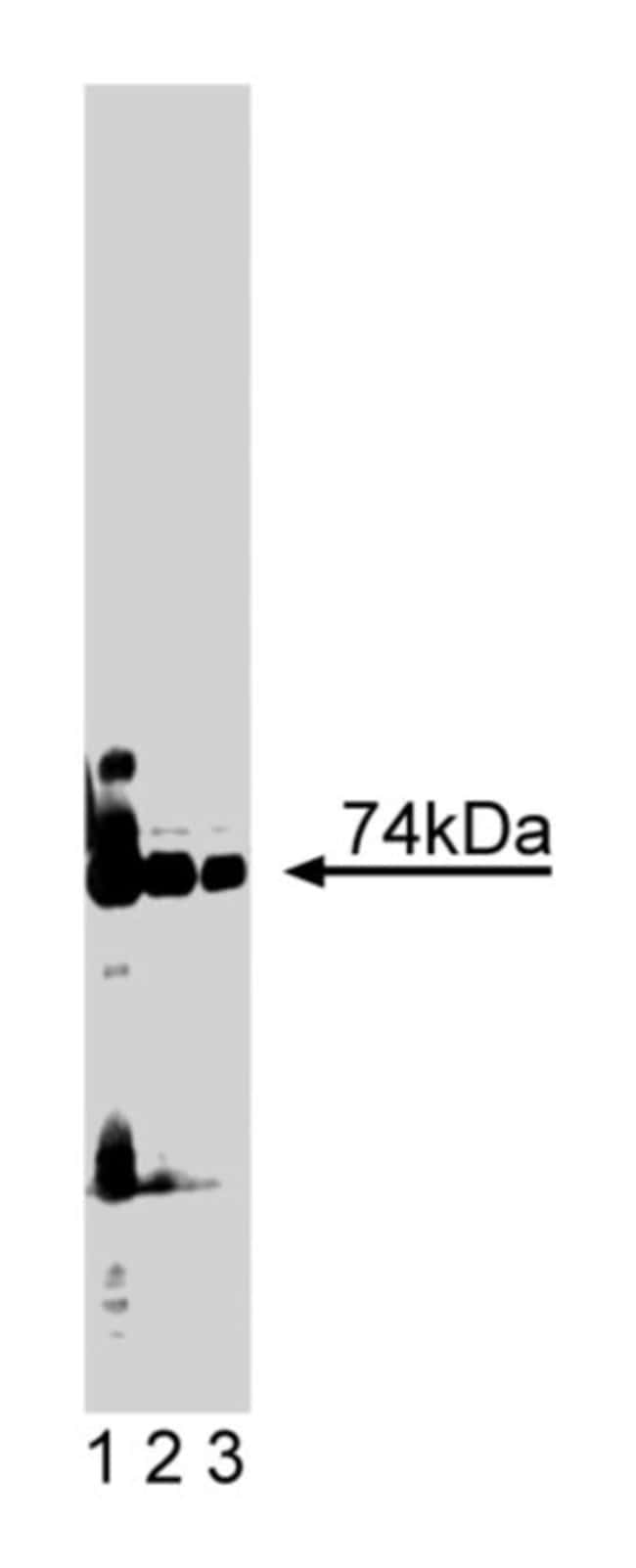

PKCλ Mouse, Unlabeled, Clone: 41, BD
Descripción
The Protein Kinase C (PKC) family of homologous serine/threonine protein kinases is involved in a number of processes such as growth, differentiation, and cytokine secretion. At least eleven isozymes have been described. These proteins are products of multiple genes and alternative splicing. PKC consists of a single polypeptide chain containing four conserved regions (C) and five variable regions (V). The N-terminal half containing C1, C2, V1, and V2 constitutes the regulatory domain and interacts with the PKC activators Ca2+, phospholipid, diacylglycerol, or phorbol ester. However, the novel PKC (nPKC) subfamily members ( δ, ε, η, and θ isoforms) and the atypical PKC (aPKC) subfamily members (ζ, ι, and λ isoforms) are Ca2+ independent and lack the C2 domain. The aPKC members are unique in that their activity is independent of diacylglycerols and phorbol esters. They also lack one repeat of the cysteine-rich sequences that are conserved in cPKC and nPKC. The C-terminal region of PKC contains the catalytic domain. The PKC pathway represents a major signal transduction system that is activated following ligand-stimulation of transmembrane receptors by hormones, neurotransmitters, and growth factors. PKC? shows the highest degree of amino acid homology with PKCζ (72%) and PKCλ mRNA is expressed in a variety of cells and tissues. The PKCλ protein kinase is capable of autophosphorylation and can be activated by phosphatidylserine, but not by other PKC activators such as diacylglycerols, Ca2+, or phorbol esters.
Immunofluorescence, Immunohistochemistry, Immunoprecipitation, Western Blotting

Especificaciones
Especificaciones
| Antígeno | PKCλ |
| Aplicaciones | Western Blot |
| Clasificación | Monoclonal |
| Clon | 41 |
| Concentración | 250μg/mL |
| Conjugado | Unconjugated |
| Formulación | Aqueous buffered solution containing BSA, glycerol, and ≤0.09% sodium azide. |
| Especie del huésped | Mouse |
| Inmunógeno | Human PKCγ aa. 397-558 |
| Método de purificación | Affinity Purified |
| Mostrar más |
For Research Use Only.
Al hacer clic en Enviar, acepta que Fisher Scientific se ponga en contacto con usted en relación con los comentarios que ha proporcionado en este formulario. No compartiremos su información para ningún otro fin. Toda la información de contacto proporcionada se mantendrá de acuerdo con nuestra Política de Privacidad. Política de privacidad.