missing translation for 'onlineSavingsMsg'
Learn More
Learn More

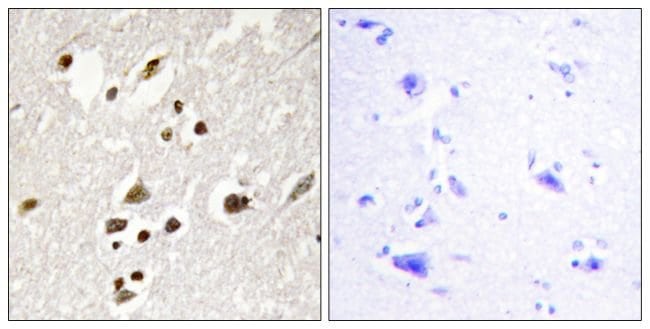
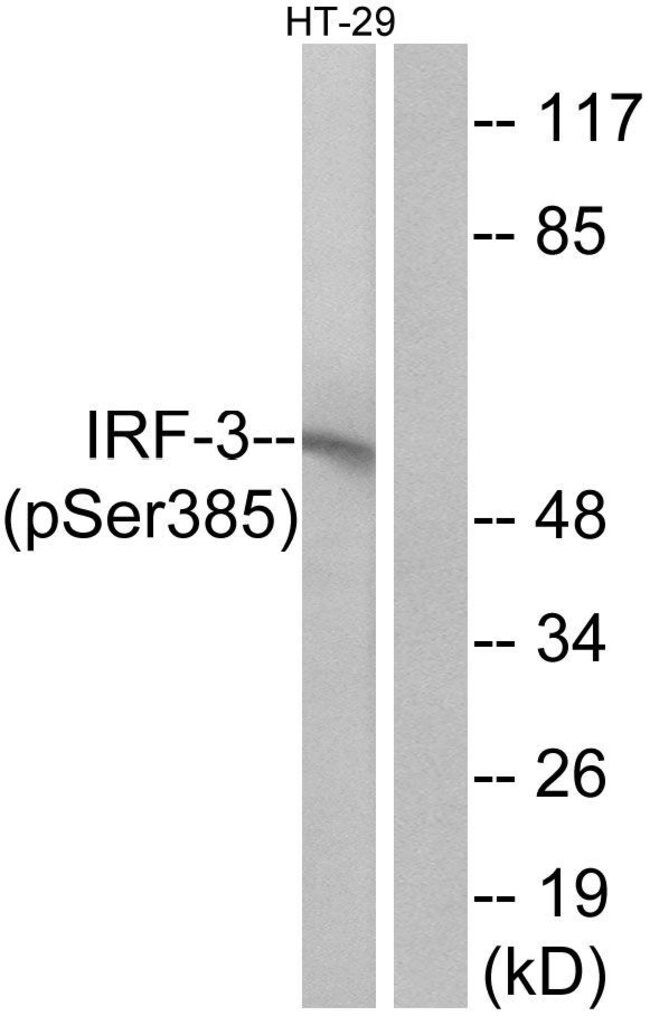
Phospho-IRF3 (Ser385) Polyclonal Antibody, Invitrogen™
Descripción
IRF-3 can inhibit cell growth and plays a critical role in controlling the expression of genes in the innate immune response. In unstimulated cells, IRF-3 is present in the cytoplasm. Viral infection results in phosphorylation of IRF-3 and leads to its translocation to the nucleus where it activates promoters containing IRF-3-binding sites. Phosphorylation of IRF-3 occurs at a cluster of C-terminal Ser and Thr residues (between 385 and 405), leading to its association with the p300/CBP coactivator protein that promotes DNA binding and transcriptional activity. During infection, IRF-3 is likely activated through a pathway that includes activation of Toll-like receptors and a kinase complex that includes IKK epsilon and TBK1. IRF-3 is phosphorylated at Ser396 following viral infection, expression of viral nucleocapsid, and double-stranded RNA treatment. These events likely play a role in activation of IRF-3.

Especificaciones
Especificaciones
| Antígeno | Phospho-IRF3 (Ser385) |
| Aplicaciones | Immunocytochemistry, Immunofluorescence, Immunohistochemistry (Paraffin), Western Blot |
| Clasificación | Polyclonal |
| Concentración | 1 mg/mL |
| Conjugado | Unconjugated |
| Formulación | Dulbecco′s PBS with 150mM NaCl, 50% glycerol and 0.02% sodium azide; pH 7.4 |
| génica | IRF3 |
| N.º de referencia del gen | Q14653, P70671 |
| Alias de gen | IRF3, IRF-3, IRF3, Interferon regulatory factor 3 |
| Símbolos de los genes | IRF3 |
| Mostrar más |
Título del producto
Al hacer clic en Enviar, acepta que Fisher Scientific se ponga en contacto con usted en relación con los comentarios que ha proporcionado en este formulario. No compartiremos su información para ningún otro fin. Toda la información de contacto proporcionada se mantendrá de acuerdo con nuestra Política de Privacidad. Política de privacidad.
¿Detecta una oportunidad de mejora?