Learn More
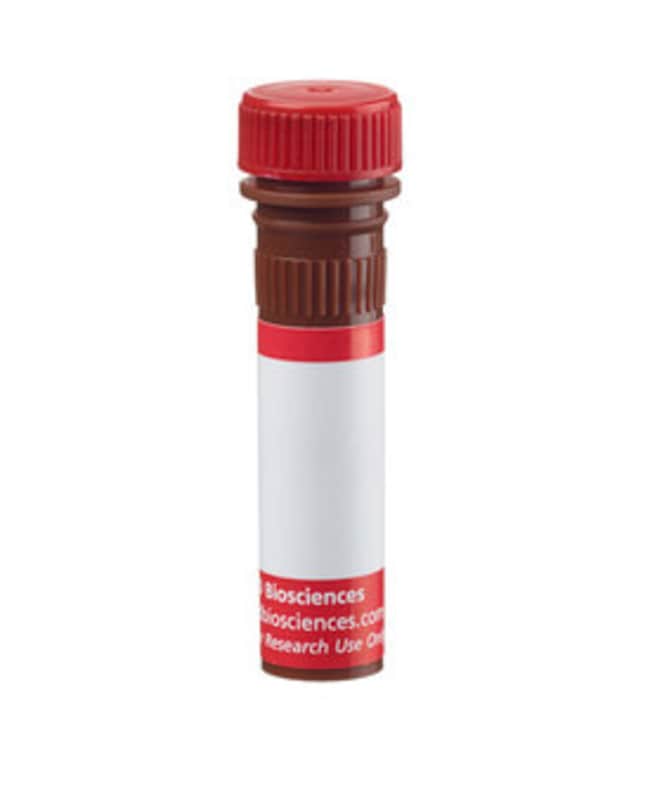
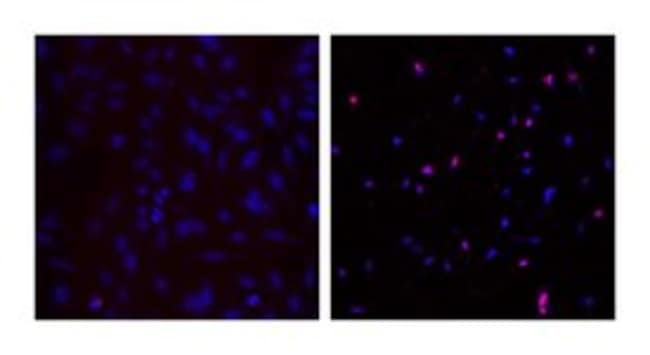
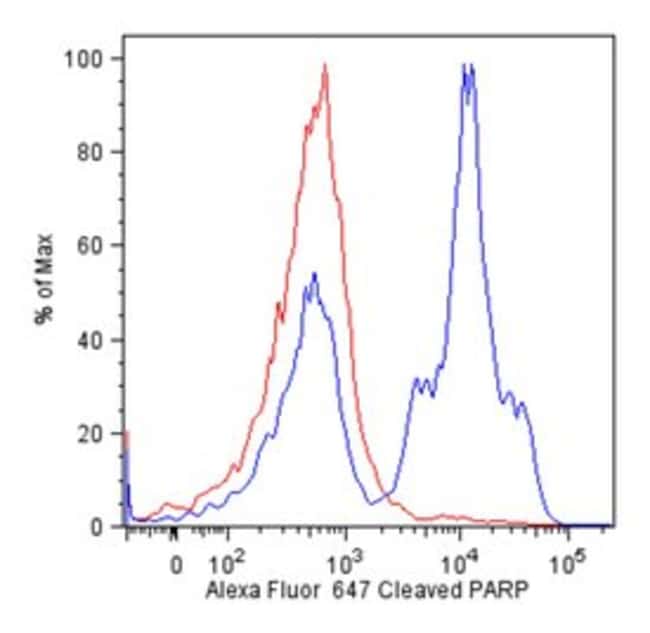
PARP (Asp 214) Mouse, Alexa Fluor 647, Clone: F21-852, BD
Descripción
PARP (Poly (ADP-Ribose) Polymerase) is a 113kDa nuclear chromatin-associated enzyme that catalyzes the transfer of ADP-ribose units from NAD+ to a variety of nuclear proteins including topoisomerases, histones, and PARP itself. The catalytic activity of PARP is increased in cells following DNA damage, and PARP is thought to play an important role in mediating the normal cellular response to DNA damage. Additionally, PARP is a target of the caspase protease activity associated with apoptosis. The PARP protein consists of an N-terminal DNA-binding domain (DBD) and a C-terminal catalytic domain separated by a central automodification domain. During apoptosis, Caspase-3 cleaves PARP at a recognition site (Asp Glu Val Asp Gly) in the DBD to form 24- and 89kDa fragments. This process separates the DBD (which is mostly in the 24kDa fragment) from the catalytic domain (in the 89kDa fragment) of the enzyme, resulting in the loss of normal PARP function. It has been proposed that inactivation of PARP directs DNA-damaged cells to undergo apoptosis rather than necrotic degradation, and the presence of the 89kDa PARP cleavage fraction is considered to be a marker of apoptosis. A peptide corresponding to the N-terminus of the cleavage site (Asp 214) of human PARP was used as the immunogen. The F21-852 monoclonal antibody reacts only with the 89kDa fragment of human PARP-1 that is downstream of the Caspase-3 cleavage site (Asp214) and contains the automodification and catalytic domains. It does not react with intact human PARP-1. Cross-reactivity with other members of the PARP superfamily is unknown. It may also recognize cleaved PARP in a number of other species due to the conserved nature of the molecule, although this has not been tested at BD Biosciences Pharmingen.
Bioimaging

Especificaciones
Especificaciones
| Antígeno | PARP (Asp 214) |
| Aplicaciones | Flow Cytometry |
| Clasificación | Monoclonal |
| Clon | F21-852 |
| Conjugado | Alexa Fluor 647 |
| Descripción | Asp214 |
| Formulación | Aqueous buffered solution containing BSA, protein stabilizer, and ≤0.09% sodium azide. |
| Especie del huésped | Mouse |
| Inmunógeno | Human cleaved PARP |
| Método de purificación | Affinity Purified |
| Mostrar más |
Al hacer clic en Enviar, acepta que Fisher Scientific se ponga en contacto con usted en relación con los comentarios que ha proporcionado en este formulario. No compartiremos su información para ningún otro fin. Toda la información de contacto proporcionada se mantendrá de acuerdo con nuestra Política de Privacidad. Política de privacidad.