Learn More



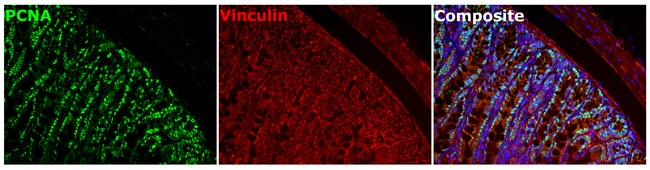
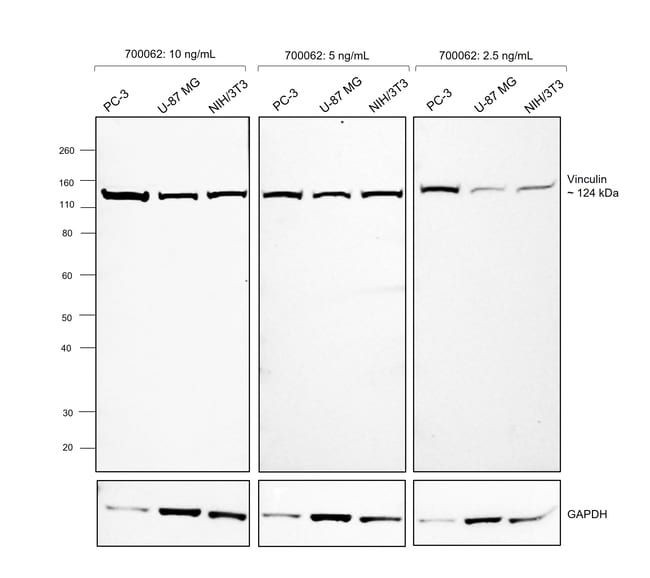
Invitrogen™ Vinculin Recombinant Rabbit Monoclonal Antibody (42H89L44)
Descripción
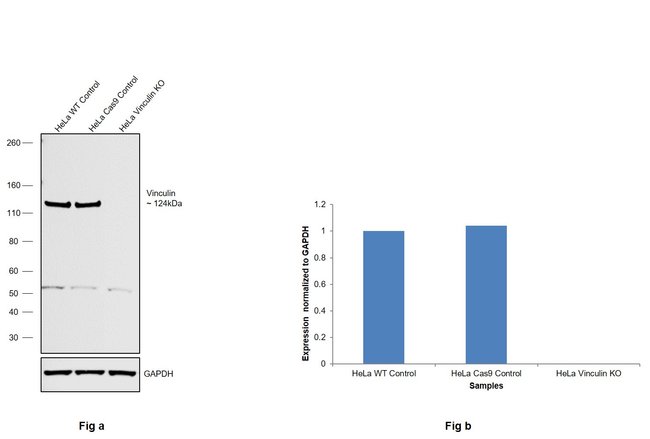
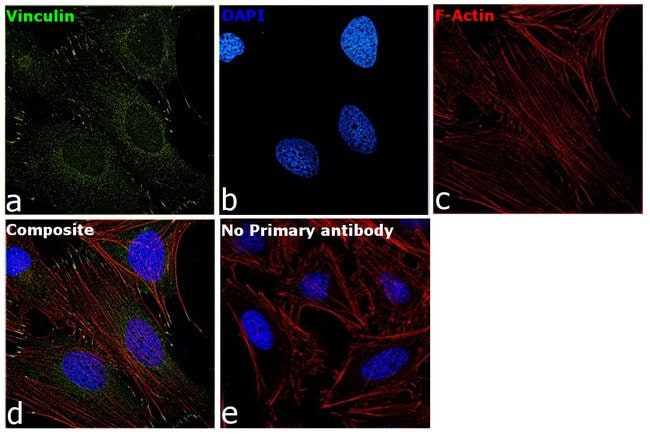
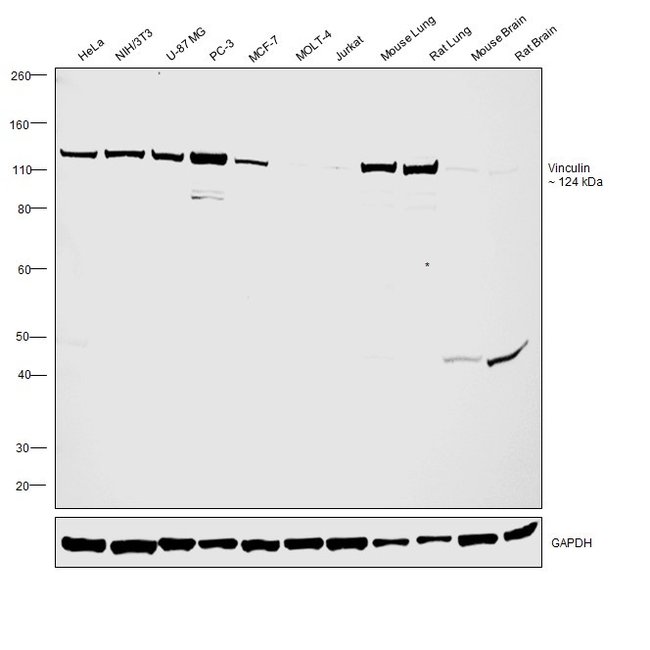
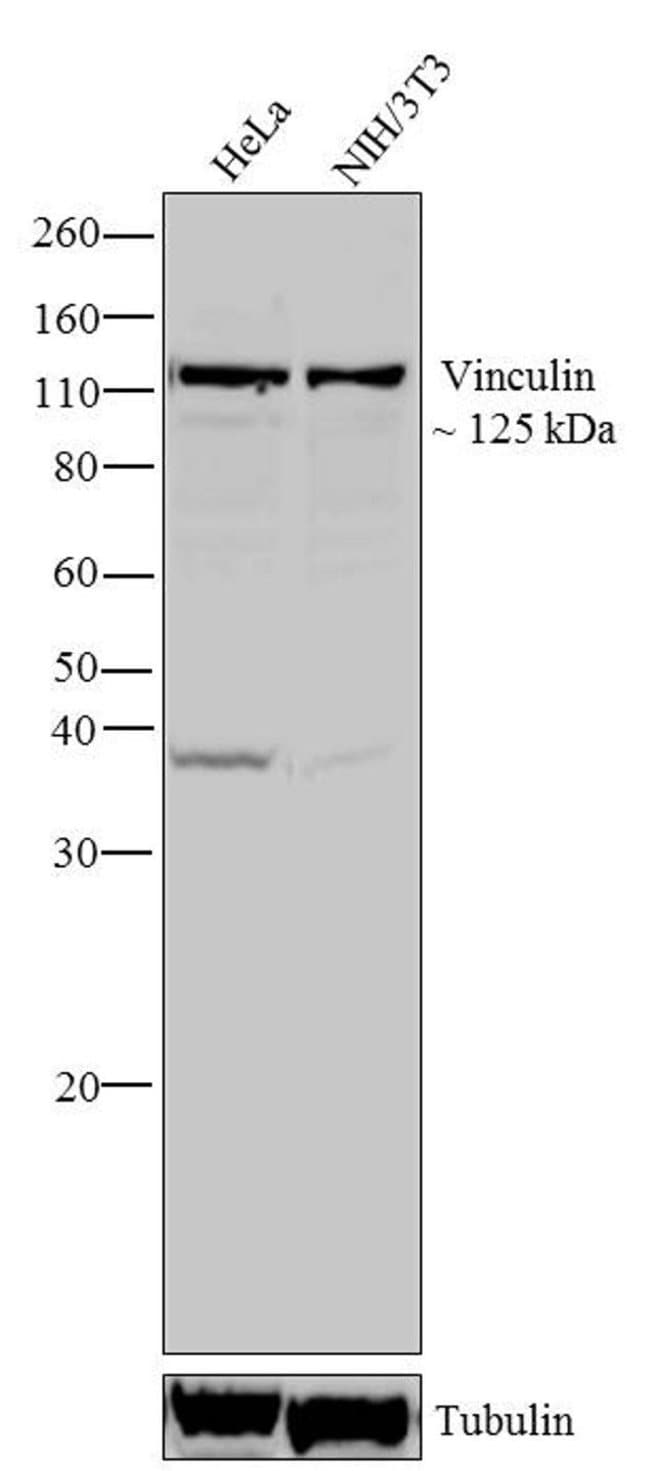
Intact IgG appears on a non-reducing gel as ~150 kDa band and upon reduction generating a ~25 kDa light chain band and a ~50 kDa heavy chain. This antibody reacts with Human Vinculin. Based on sequence similarity, reactivity to chimpanzee, Rhesus monkey, swine, equine, mouse, rat, bovine, and chicken is expected. Immunogen sequence IRGALAEARKIAELCDDPKERDDILRSLGEI SALTSKLADLRRQGKGDSPEARALAKQV ATALQNLQTKTNRAVANSRPAKAAVHLE GKIEQAQRWIDNPTVDDRGVGQAAIRGL VAEGHRLANVMMGPYRQDLLAKCDRVD QLTAQLADLAARGEGESPQARALASQLQ DSLKDLKARMQEAM. Test material for western blotting/immunofluorescence: HeLa cells. Recombinant rabbit monoclonal antibodies are produced using in vitro expression systems. The expression systems are developed by cloning in the specific antibody DNA sequences from immunoreactive rabbits. Then, individual clones are screened to select the best candidates for production. The advantages of using recombinant rabbit monoclonal antibodies include: better specificity and sensitivity, lot-to-lot consistency, animal origin-free formulations, and broader immunoreactivity to diverse targets due to larger rabbit immune repertoire.

Especificaciones
Especificaciones
| Antígeno | Vinculin |
| Aplicaciones | Flow Cytometry, Immunohistochemistry (Paraffin), Western Blot, Immunocytochemistry, Multiplex Immunohistochemistry |
| Clasificación | Recombinant Monoclonal |
| Clon | 42H89L44 |
| Concentración | 0.5 mg/mL |
| Conjugado | Unconjugated |
| Formulación | PBS with 0.09% sodium azide |
| génica | VCL |
| N.º de referencia del gen | P18206, Q64727 |
| Alias de gen | 9430097D22; AA571387; AI462105; AW545629; CMD1W; CMH15; epididymis luminal protein 114; HEL114; metavinculin; meta-vinculin; metavinculin {ECO:0000250; MV; MVCL; RP11-178G16.3; UniProtKB:P18206}; unnamed protein product; Vcl; vcl {ECO:0000250; VIN; vinc; vinc 1; VINC1; Vinculin; vinculin {ECO:0000250 |
| Mostrar más |
Al hacer clic en Enviar, acepta que Fisher Scientific se ponga en contacto con usted en relación con los comentarios que ha proporcionado en este formulario. No compartiremos su información para ningún otro fin. Toda la información de contacto proporcionada se mantendrá de acuerdo con nuestra Política de Privacidad. Política de privacidad.