Learn More
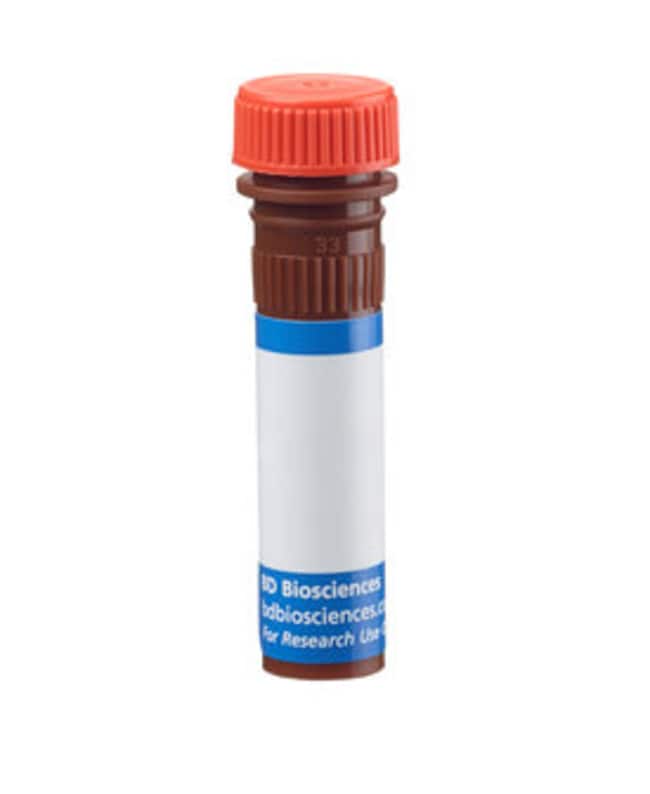

CD326 Mouse anti-Human, PE-CF594, Clone: EBA-1, BD
Descripción
The EBA-1 monoclonal antibody specifically binds to human CD326. CD326 is an approximately 40 kDa type 1 transmembrane glycoprotein and adhesion molecule that mediates intercellular adhesive interactions. CD326 is also known as epithelial adhesion molecule (EpCAM), epithelial glycoprotein 2 (EGP-2), and epithelial surface antigen (ESA). The epithelial cells present in non-squamous epithelia and tumors derived from such cells show EpCAM expression. The normal epithelial cells reactive with anti-EpCAM antibodies are those present in the (lower) respiratory tract; the (lower) gastrointestinal tract; tubules in the kidney; the surface epithelium of the ovary; the exocrine and endocrine pancreas; secondary germ cells of telogenic hair follicles; and secretory tubules of sweat glands in the skin, whereas the epidermis is negative. In addition, all epithelial cells in the thyroid and epithelial cells in the thymus show EpCAM expression, while the outer cortex and Hassall’s corpuscles have low expression. In the liver, only the bile ducts appear to be positive with anti-EpCAM antibodies. Non-squamous- carcinoma cells have high EpCAM expression; some squamous carcinoma cells. Tumors arising from non-epithelial cells, such as lymphoma, mesothelioma, neuroblastoma, and melanoma, do not express EpCAM.
This antibody is conjugated to BD Horizon PE-CF594, which has been developed exclusively by BD Biosciences as a better alternative to PE-Texas Red™. PE-CF594 excites and emits at similar wavelengths to PE-Texas Red™ yet exhibits improved brightness and spectral characteristics. Due to PE having maximal absorption peaks at 496nm and 564nm, PE-CF594 can be excited by the blue (488-nm), green (532-nm) and yellow-green (561-nm) lasers and can be detected with the same filter set as PE-Texas Red™ (eg, 610/20-nm filter).

Especificaciones
Especificaciones
| Antígeno | CD326 |
| Aplicaciones | Flow Cytometry |
| Clasificación | Monoclonal |
| Clon | EBA-1 |
| Conjugado | PE-CF594 |
| Descripción | EPCAM; EGP; ESA; GA733-2; hEGP-2; KSA; M4S1; MIC18; MK-1; TACSTD1; TROP1 |
| Formulación | Aqueous buffered solution containing BSA and ≤0.09% sodium azide. |
| Especie del huésped | Mouse |
| Inmunógeno | Breast carcinoma-associated mucin BCA-225 |
| Método de purificación | Affinity Purified |
| Mostrar más |
Al hacer clic en Enviar, acepta que Fisher Scientific se ponga en contacto con usted en relación con los comentarios que ha proporcionado en este formulario. No compartiremos su información para ningún otro fin. Toda la información de contacto proporcionada se mantendrá de acuerdo con nuestra Política de Privacidad. Política de privacidad.