missing translation for 'onlineSavingsMsg'
Learn More
Learn More

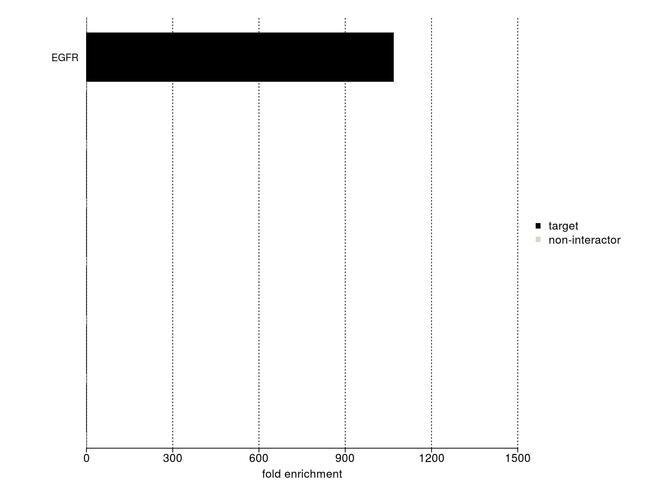
EGFR Monoclonal Antibody (199.12), Invitrogen™
Descripción
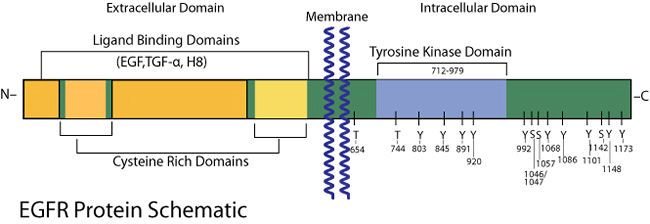
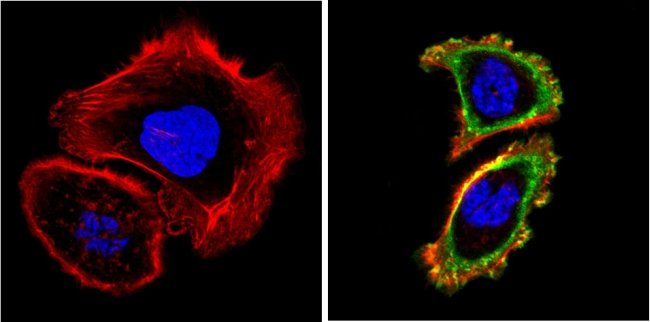
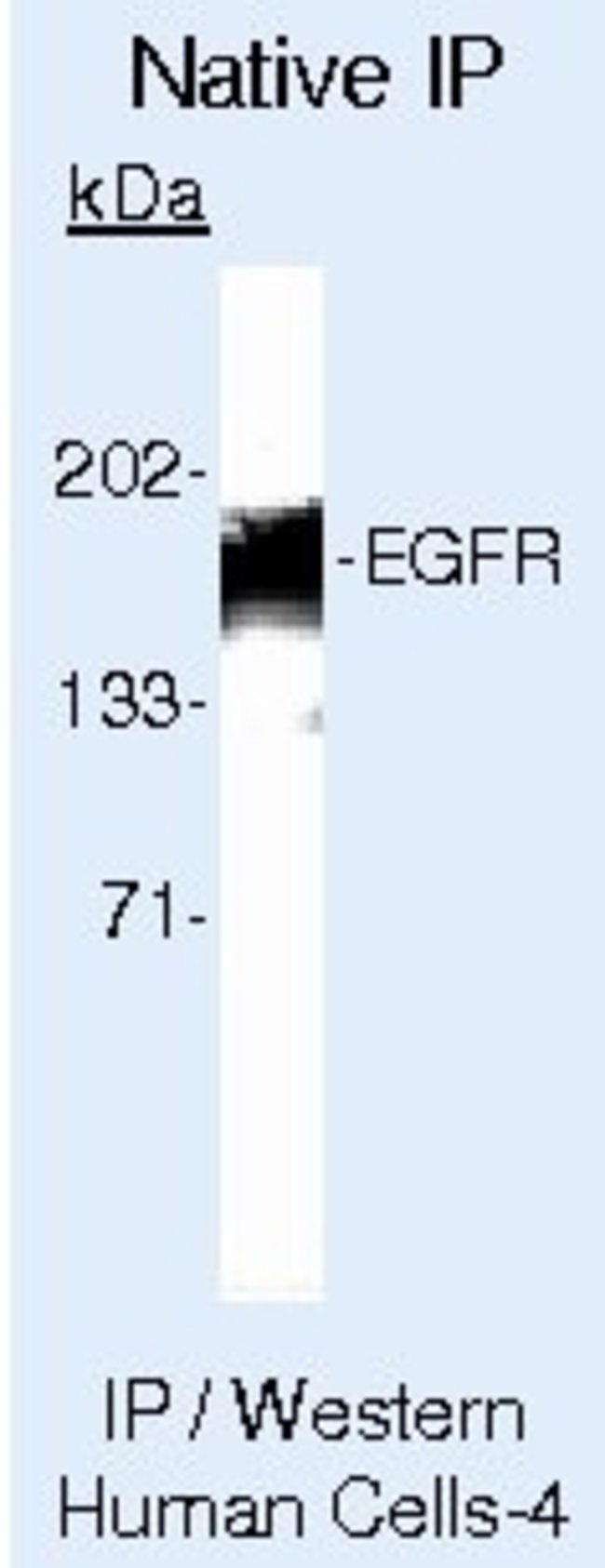
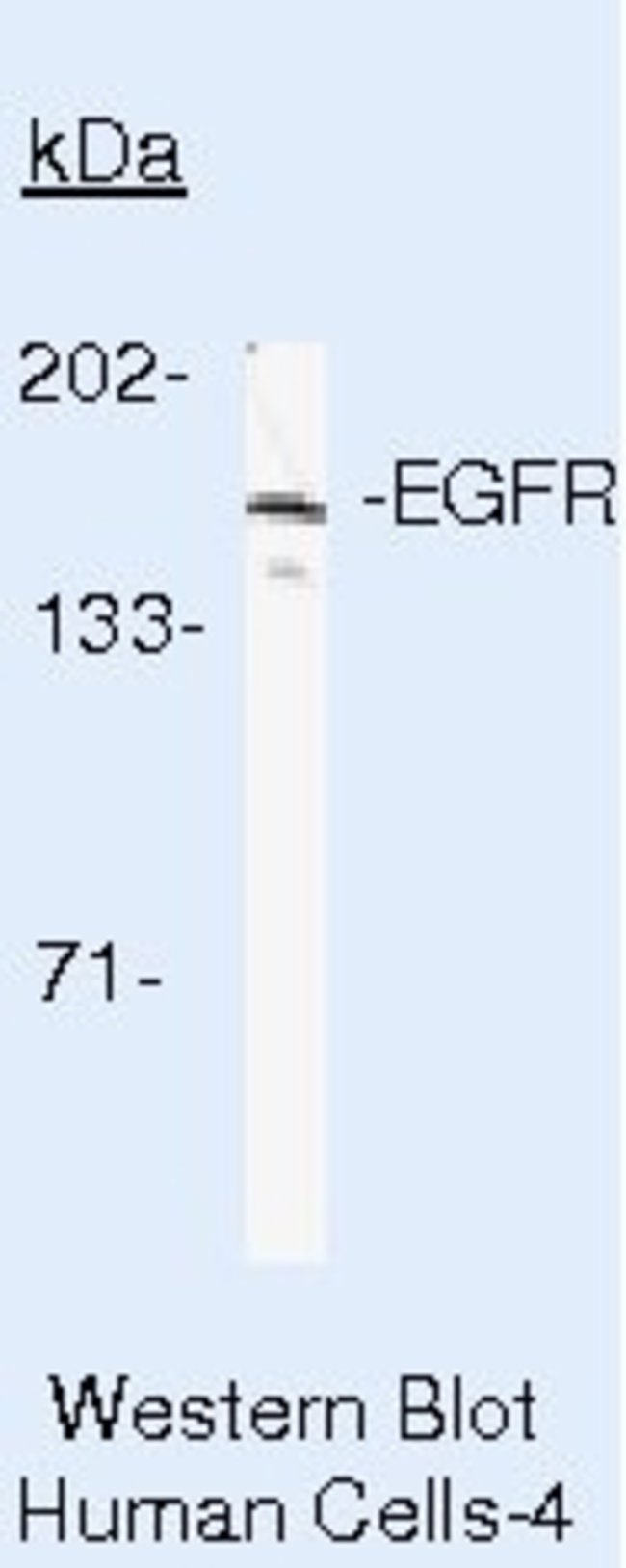
AHR5072 reacts with an extracellular domain of EGFR. The molecular weight of the antigen is 170kDa (wild type) and 145kDa (vIII variant). This antibody does not block the binding of EGF to EGFR.
EGFR (Epidermal growth factor receptor, HER1, ErbB1) is encoded by the EGFR gene located on chromosome 7 in humans. EGFR belongs to the HER/ERbB family of proteins that includes three other receptor tyrosine kinases, ERbB2, ERbB3, ERbB4. EGFR is a transmembrane receptor and binding of its cognate ligands such as EGF (Epidermal Growth Factor) and TGF alpha (Transforming Growth Factor alpha) to the extracellular domain leads to EGFR dimerization followed by autophosphorylation of the tyrosine residues in the cytoplasmic domain. Phosphorylation of EGFR at certain residues is also mediated by Src-non-receptor kinase. EGFR activation signals multiple downstream signaling cascades such as the Ras - ERK, PI3-K - Akt, Jak - STAT and PKC pathways that help in growth and proliferation of cells. Phosphorylation of EGFR at Y1086 specifically allows binding of the adaptor protein GRB2, leading to activation of the MAPK pathway. Upon receptor activation and signaling, EGFR is endocytosed and targeted for degradation or recycling. Mutations in the EGFR gene are associated with lung cancer and multiple alternatively spliced transcript variants encode different protein isoforms of EGFR have been found. Increased production or activation of EGFR has been associated with poor prognosis in a variety of tumors. Moreover, EGFR overexpression is observed in tumors of the head and neck, brain, bladder, stomach, breast, lung, endometrium, cervix, vulva, ovary, esophagus, stomach and in squamous cell carcinoma.

Especificaciones
Especificaciones
| Antígeno | EGFR |
| Aplicaciones | Immunocytochemistry, Immunofluorescence, Immunoprecipitation, Western Blot |
| Clasificación | Monoclonal |
| Clon | 199.12 |
| Concentración | 0.2 mg/mL |
| Conjugado | Unconjugated |
| génica | EGFR |
| N.º de referencia del gen | P00533 |
| Alias de gen | EC 2.7.10.1, ERBB1, Epidermal growth factor receptor precursor, Receptor protein-tyrosine kinase ErbB-1, kinase EGFR |
| Símbolos de los genes | EGFR |
| Mostrar más |
Título del producto
Al hacer clic en Enviar, acepta que Fisher Scientific se ponga en contacto con usted en relación con los comentarios que ha proporcionado en este formulario. No compartiremos su información para ningún otro fin. Toda la información de contacto proporcionada se mantendrá de acuerdo con nuestra Política de Privacidad. Política de privacidad.
¿Detecta una oportunidad de mejora?