missing translation for 'onlineSavingsMsg'
Learn More
Learn More
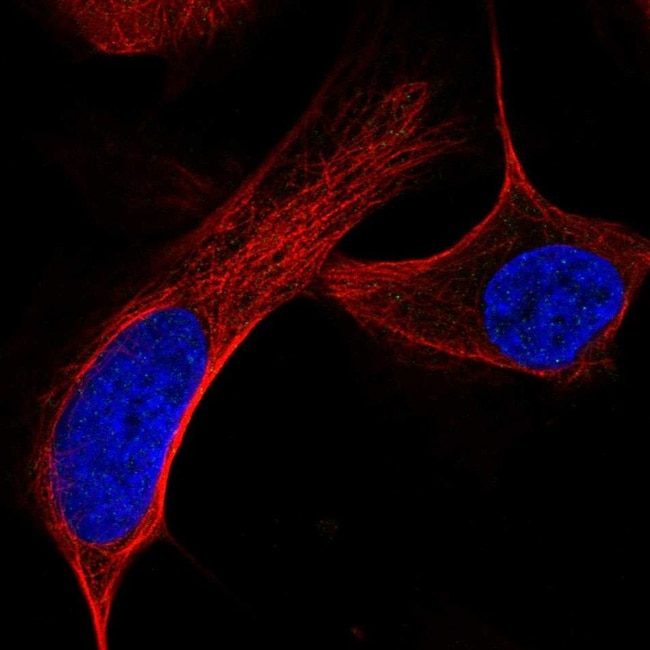
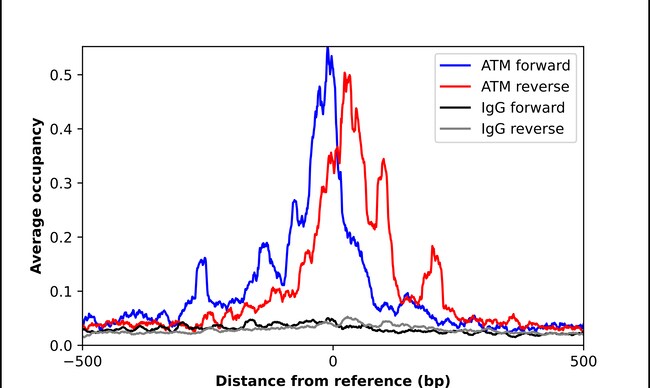
Invitrogen™ ATM Polyclonal Antibody

Descripción
Immunogen sequence: LTIVEVLLYD PLFDWTMNPL KALYLQQRPE DETELHPTLN ADDQECKRNL SDIDQSFNKV AERVLMRLQE KLKGVE Highest antigen sequence indentity to the following orthologs: Rat - 91%, Mouse - 91%.
Ataxia-telangiectasia Mutated (ATM) is a protein that belongs to the PI3/PI4 kinase family. Ataxia-telangiectasia is a rare autosomal recessive disorder characterized by progressive neurologic degeneration, immunologic deficiency, and an increased risk of lymphoid cancer. The ATM gene codes for a protein belonging to the phosphoinositide 3-kinase (PI3K) superfamily. ATM phosphorylates proteins instead of lipid and has many downstream targets that act as cell-cycle regulators including: P53, Mdm2, BRCA1, and SMC1. The ATM protein is responsible for repairing double-stranded DNA breaks that occur because of ionizing radiation and other mutagens. The ATM's C-terminal region has extensive homology to the catalytic domains of phosphatidylinositol 3-kinases (PI3 kinases). Studies have shown that ATM becomes autophosphorylated and upregulated by exposure to ionizing radiation. AT cells are hypersensitive to ionizing radiation, impaired in mediating the inhibition of DNA synthesis and display delays in p53 induction. Further, DNA damage caused by ionizing irradiation activates ATM-kinase, leading to a cascade of kinase reactions that regulate cell cycle, apoptosis, and DNA damage repair. Studies have linked ATM to apoptosis along with Nbs1 and Chk2 in the E2F1 pathway.

Especificaciones
Especificaciones
| Antígeno | ATM |
| Aplicaciones | ChIP Assay, Immunocytochemistry |
| Clasificación | Polyclonal |
| Concentración | 0.2 mg/mL |
| Conjugado | Unconjugated |
| Formulación | PBS with 40% glycerol and 0.02% sodium azide; pH 7.2 |
| génica | ATM |
| N.º de referencia del gen | Q13315 |
| Alias de gen | AI256621; AT mutated; A-T mutated; A-T mutated homolog; AT mutated protein; AT1; ATA; Ataxia t; Ataxia telangiectasia gene mutated in human beings; ataxia telangiectasia mutated; Ataxia telangiectasia mutated homolog; ATC; ATD; ATDC; ATE; Atm; ATM serine/threonine kinase; C030026E19Rik; DKFZp781A0353; EC 2.7.1.37; MGC74674; serine-protein kinase ATM; TEL1; TEL1, telomere maintenance 1, homolog; TELO1 |
| Símbolos de los genes | ATM |
| Mostrar más |
Título del producto
Al hacer clic en Enviar, acepta que Fisher Scientific se ponga en contacto con usted en relación con los comentarios que ha proporcionado en este formulario. No compartiremos su información para ningún otro fin. Toda la información de contacto proporcionada se mantendrá de acuerdo con nuestra Política de Privacidad. Política de privacidad.
¿Detecta una oportunidad de mejora?